
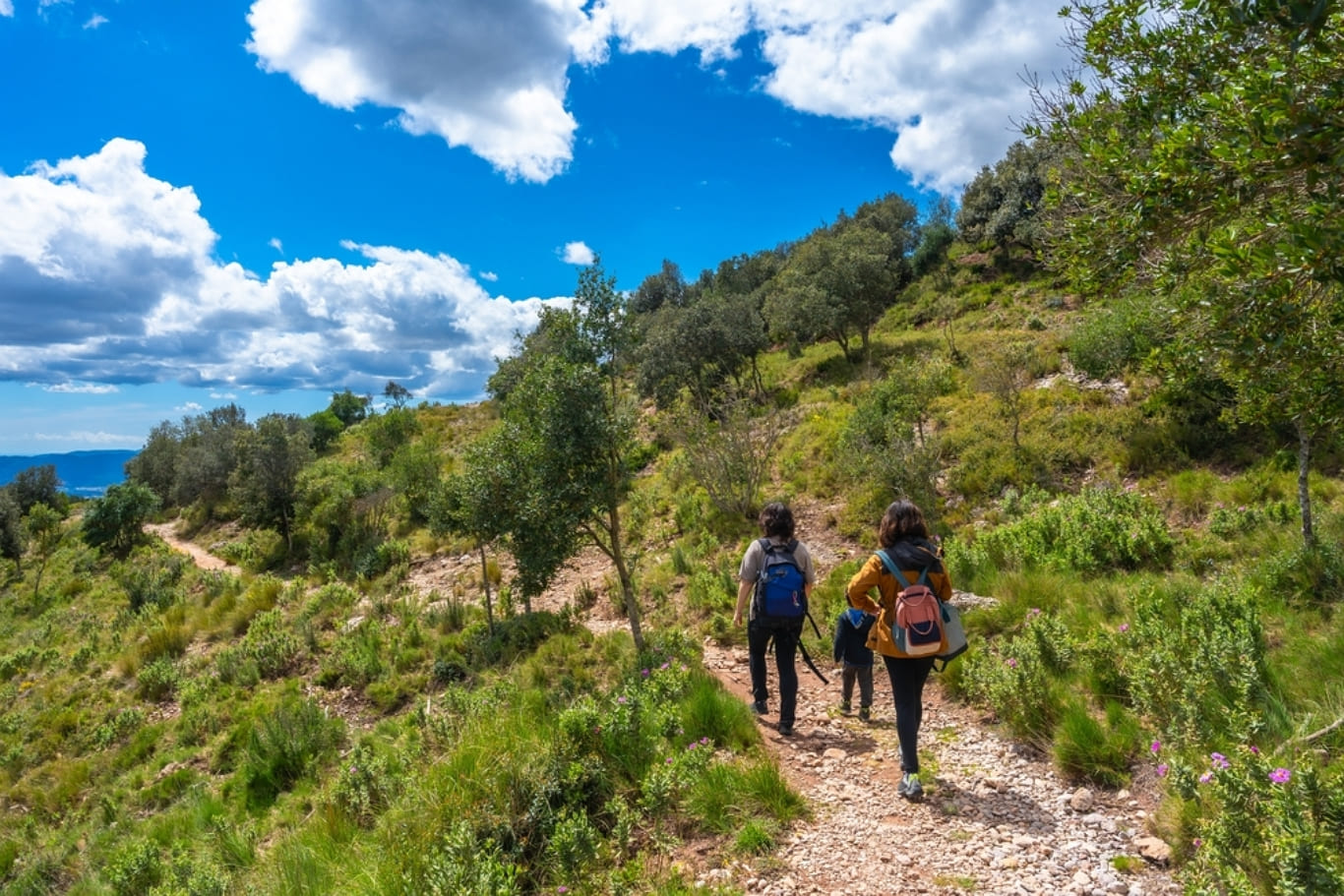
Trail walking: how to enjoy paths and waymarked routes with the best boots and shoes
Paths and waymarked routes with the best footwear for your needs: Trail walking
Trail walking starts with choosing a path you would like to explore, checking how long it takes and preparing what you need to enjoy it at your own pace. A waymarked route lets you discover forests, valleys or stretches of coastline along a defined itinerary with markers to help you find your way. You do not need to seek out major changes in elevation to have a good day outdoors. It is also important not to confuse trail walking with hiking or trekking, which are different experiences.
But take care! Even easy routes can have stones, roots or slopes. Choose a route that suits your group’s experience, check the conditions and wear comfortable footwear with a sole suited to the path.
What is trail walking, and what do waymarked routes offer?
Trail walking means exploring natural paths and trails on foot. It can involve short walks or outings lasting several hours, with the distance, elevation change and terrain adapted to the people taking part. Its appeal lies in crossing a forest, following a path between villages or reaching somewhere worth discovering.
Waymarked routes help beginners by providing markers along the way, but a marked route is not necessarily an easy one.
- Rural paths and tracks: generally more even ground, though slopes or stones may still be present.
- Forest trails: roots, damp conditions and narrow sections through vegetation.
- Coastal or lower mountain routes: changes in surface and exposure to sun or wind.
- Routes between towns and villages: landscapes and heritage to discover on foot.
How to choose a suitable route
Choose your route according to the time available, fitness levels and the people taking part. For a first outing, a familiar, well-described route is often a good choice. If you are walking in a group, plan around the person who needs to move most slowly.
A short path with a steady climb can be more demanding than a longer, flat one. It also matters whether the route is circular, returning to the starting point, or linear, requiring you to arrange the return journey. Where available, Montaña Segura’s MIDE rating helps you assess the environment, navigation, terrain and effort involved. If you are walking with children or beginners, also check opportunities to rest, areas exposed to the sun and places where it would be easy to turn back.
- Check the total distance and cumulative elevation gain.
- Check the type of terrain, especially for stones or wet areas.
- Allow time to rest and stop along the way.
- Confirm access arrangements and restrictions, and look for options to shorten the route.
What does it mean when a trail is waymarked?
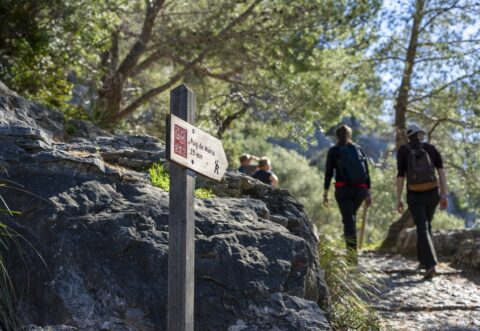
Painted markers and signposts help at junctions and forks, but they may be damaged or hidden. Carry an up-to-date route description and check the map before setting off. Following a trail involves more than looking for arrows: knowing the main points along the route lets you enjoy the landscape and spot a wrong turn in time.
- Identify the start, direction of travel and forks along the route.
- Download the route so you can view it without a phone signal.
- If the signs and map do not match, stop before continuing.
How to prepare for a trail walk
Before setting off, check AEMET’s weather forecast or the forecast for the area you will be visiting. Heat, rain and wind change the conditions underfoot. Leave enough time to return in daylight, even if someone walks more slowly than expected.
Preparation comes down to three actions: plan, equip yourself with everything you need and act with care.
- Set a realistic schedule with breaks and extra time.
- Tell someone your route and expected return time.
- Carry enough water and food; do not assume drinking fountains will be working.
- Make sure everyone knows the plan and the outing is suitable for the whole group.
What to bring for comfortable walking
Your equipment depends on the season, duration and surroundings. For an outing lasting a few hours, a small, well-organized backpack is usually enough.
Layered clothing helps you adapt to temperature changes, while suitable socks prevent uncomfortable folds inside your footwear.
- Water, food and warm clothing suited to the forecast.
- Sun protection and a layer for rain or wind, if needed.
- A map or downloaded route, a charged phone and another navigation reference.
- A basic first-aid kit, whistle and headlamp for unexpected situations.
- Footwear you have already tried and well-fitting socks.
How to choose walking boots or shoes
Your footwear should suit the path and the shape of your foot. For defined trails and walks in lower mountain terrain, consider flexibility, weight, support and comfort. Two people may need different models for the same route.
Think about the terrain and weather you encounter most often. A walk along a dry track does not necessarily call for the same feel underfoot as a damp trail with roots. Water resistance can be useful in certain conditions, while warm days call for particular attention to ventilation and temperature comfort. At Bestard, we recommend considering performance features and fit in our guide to choosing the right boot.
- Sole: a design suited to the activity; grip varies with its condition.
- Flexibility: useful for a natural stride on easy paths.
- Support: a stable heel and no excessive pressure over the instep.
- Materials: check breathability, lining and protection against moisture.
-> Low-cut shoes or mid-cut boots?
Both options can work for trail walking. Low-cut shoes offer a different feeling of movement, while mid-cut boots add coverage around the ankle. Height alone does not determine whether footwear is suitable for a particular type of terrain.
- Try low-cut shoes for walks, defined paths and everyday use.
- Consider mid-cut boots if you prefer more protection.
- Walk in both types before deciding, including on gentle downhill slopes.
-> Fit matters as much as technical specifications
If your toes hit the front or your heel moves around, the fit is not right. Try the footwear on both feet with suitable technical socks: the last, width and internal volume vary between models.
- Leave room for your toes when walking downhill.
- Adjust the laces without squeezing the instep.
- Check for possible rubbing and try the footwear on short walks.
Bestard’s Trail Walking range: models to enjoy the path
Bestard’s Trail Walking range, called Senderismo in Spanish, brings together boots and shoes for walks in lower mountain terrain, long walks and routes such as the Camino de Santiago. The models are designed for lightness, comfort and versatility, but they do not all have the same sole, flexibility or lining.
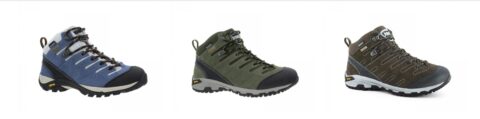
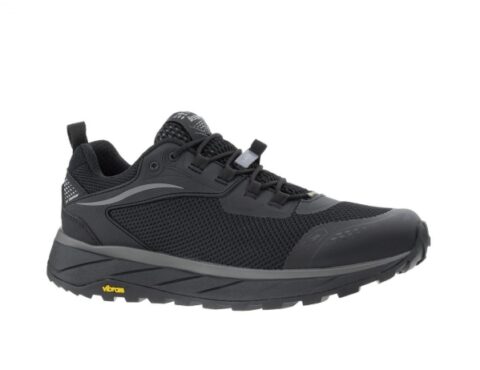
Three examples illustrate the options in the collection:
- Camí, ref. 4030: a lightweight, very flexible low-cut shoe for less demanding activities, with a Vibram® Sky Running + EVA sole and GORE-TEX® lining.
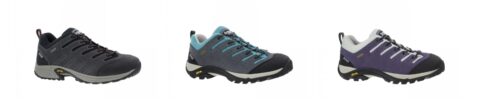
- Travessa, ref. 3420: a lightweight, flexible mid-cut boot for trail walking and forest walks.
- Speedwave II, ref. 0440: a multipurpose mesh shoe with a Vibram® Bayu + EVA sole for walking in nature and around town.
Your choice depends on your foot type, the activity and the weather conditions. Check the waterproofing features of each model: the range does not use the same lining throughout. Trying footwear in a store and taking a short first walk can tell you more about its actual comfort than a comparison based solely on appearance.
Safety and respect for the environment
Waymarks do not replace paying attention during your walk. If someone gets tired or the weather worsens, shorten or end the route.
Staying on existing paths helps reduce erosion and disturbance to wildlife and vegetation. Check for any access restrictions.
- Keep the group together and adapt your pace to the slowest walker.
- Avoid shortcuts and take your waste with you, including food scraps.
- Respect wildlife, crops, private land and other users.
- If you are unsure about the route or safety, stop and review your plan.
How to care for your footwear after a walk
After walking, remove stones and mud and check for wear. Follow Bestard’s cleaning and care instructions for the materials used in your model.
- Remove the insoles and dry the footwear away from direct heat.
- Brush the sole and outer surfaces once dry.
- Do not use a washing machine; check the laces and sole before putting the footwear away.
Frequently asked questions
What counts as an easy walking route?
It is a route whose distance, elevation change, terrain and navigation demands suit the walker’s experience. A waymarked route is not automatically easy: always check its full description and current conditions.
Do I need boots for trail walking?
Not necessarily. On easy paths, purpose-designed walking shoes may be suitable. Mid-cut boots are another option, especially for people who prefer that coverage and type of fit. Comfort and suitability for the terrain are decisive.
What should I check before following a waymarked route?
Check the distance, elevation change, duration, trail conditions, weather forecast, access and turnaround points. Carry a map or an up-to-date description, even when there are markers along the route.
Are all Bestard walking shoes waterproof?
You should not assume so. The range includes models with different materials and linings. Check the specifications of your chosen model to confirm whether it includes GORE-TEX® and what technical features it offers.
How do I know if my footwear fits properly?
Your heel should stay in place, your instep should not be under excessive pressure and your toes need room when walking and descending. Try the footwear on both feet with your usual socks and walk around a little before deciding.