Activities around the Matterhorn – Pascual Fuster
INTRODUCTION
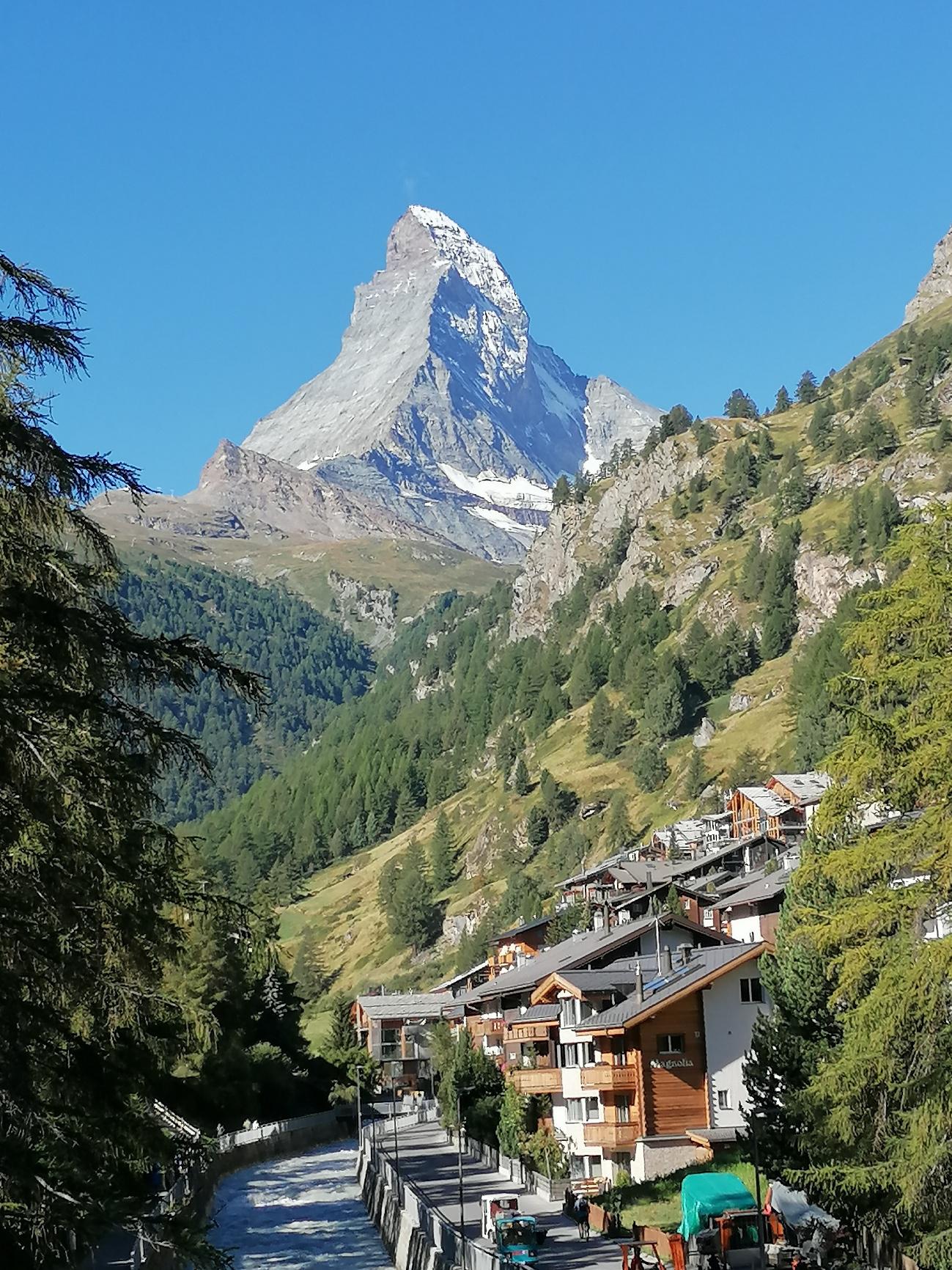
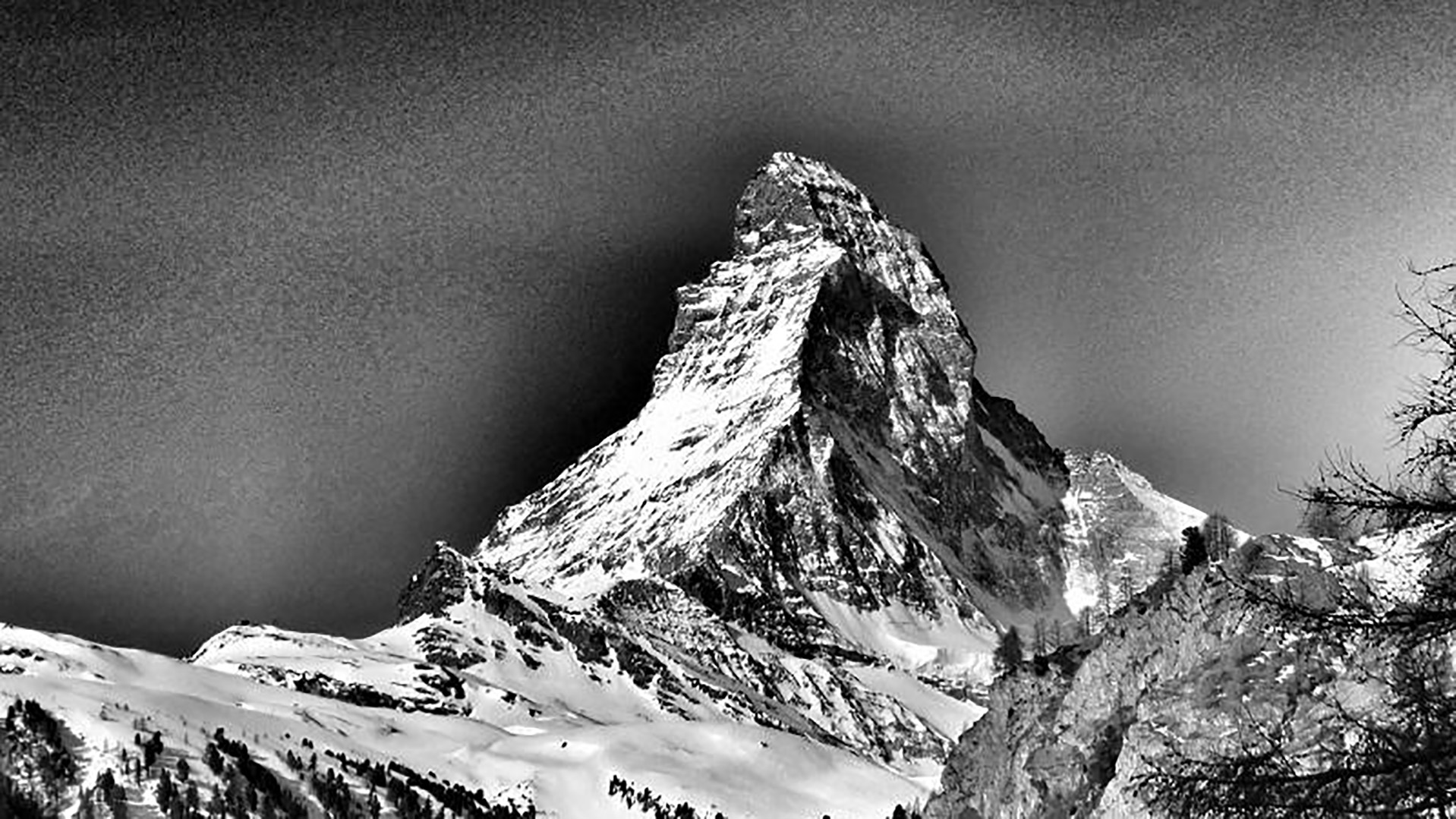
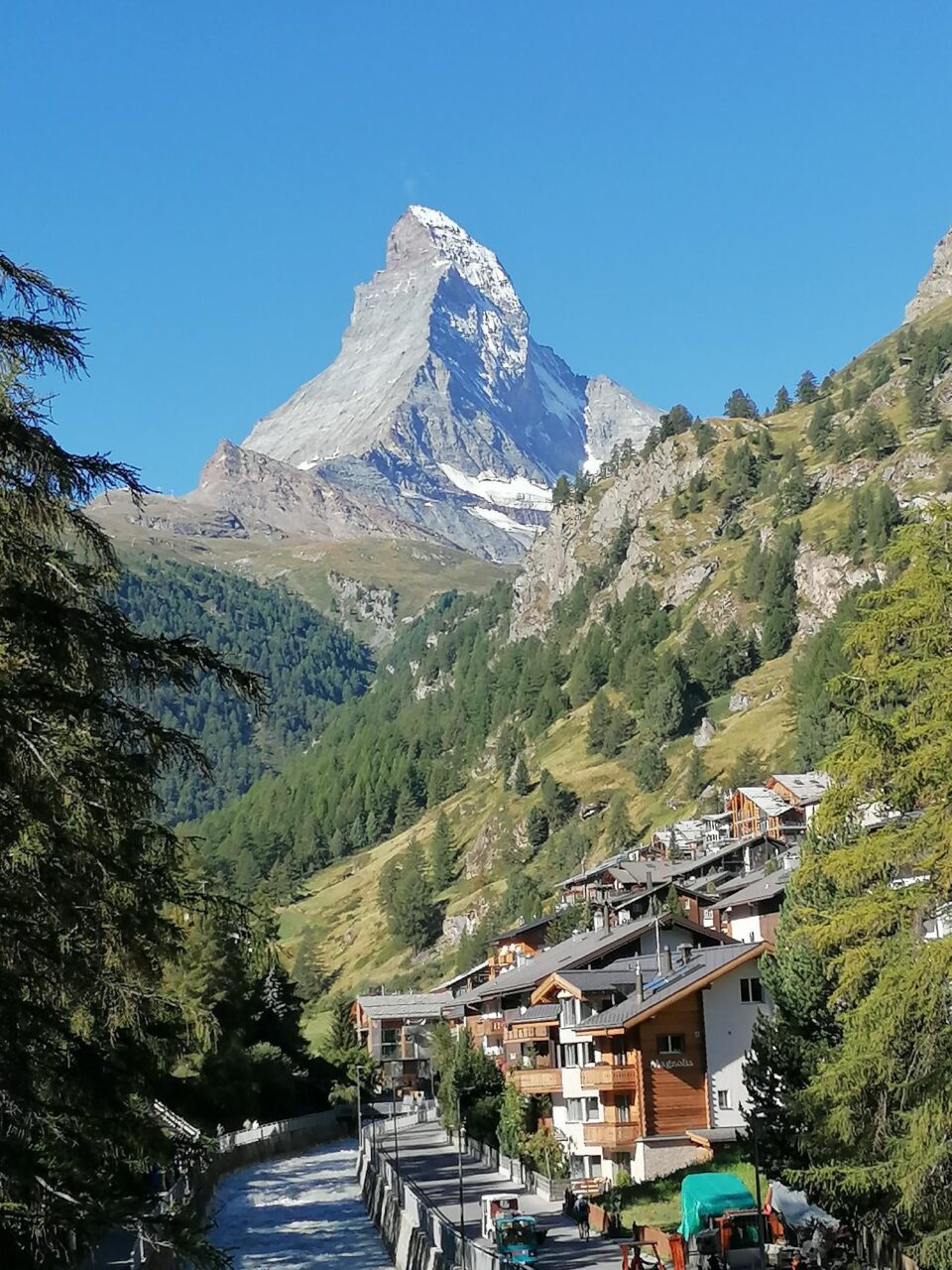
The Matterhorn for the Swiss, or Cervino for the Italians, is the perfect mountain, the mountain that any child would draw if you asked them to draw one, sharp, pyramidal, and with snow on top.
I had been dreaming of climbing it for a long time. For years, I had undertaken challenging high-altitude expeditions: McKinley (Denali) in Alaska, Aconcagua in Argentina, Cotopaxi and Chimborazo in Ecuador, Pico Lenin in Kyrgyzstan, and a long list of others. For several years, I had also been rock climbing weekly with friends, and I felt it was time to combine both experiences, altitude and climbing. Naturally, the Matterhorn emerged as the perfect mountain.

The aura of mystery surrounding it began with its first ascent, during which four of the seven climbers fell to their deaths. The rivalry in 1865 between Whymper and Carrel, each ascending from a different side, further increased its allure for mountaineers.
With an absolutely pyramidal shape, the Matterhorn has four faces and four ridges that converge at a sharp ridge 85 meters long, connecting its two summits, the Italian (eastern) side, which is lower (4,476.4 m), and the Swiss side, which is higher (4,477.5 m).
Located in the Valais region, the closest town on the Swiss side is Zermatt, while on the Italian side, it is Breuil-Cervinia, formerly called just Breuil.
EQUIPMENT SELECTION
For the Matterhorn ascent, I immediately considered the most suitable equipment. Climbing and scrambling 1,200 meters of elevation from the Hörnli hut, and then descending, required light gear that met all the necessary requirements.
I needed to replace my helmet, backpack, and boots. I won’t go into details about the helmet and backpack, but the main criteria were that they be lighter while still performing their function effectively.
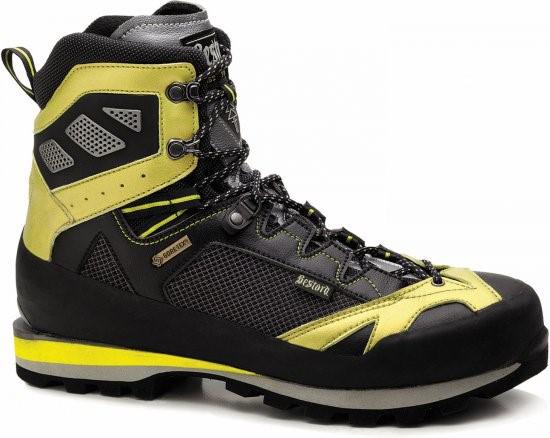
When choosing boots, I approached it with a blank slate. Although I had successfully used Bestard boots in previous expeditions, this time I wanted to start from scratch and research the available brands to find the boots that would meet my expectations. They had to be light, durable, and compatible with semi-automatic crampons, provide sufficient thermal insulation in bad weather, allow freedom of movement, and offer good traction on rock.
After thorough market research, I chose the Bestard Trek Alpine FF boots. They weigh only 1,350 g per pair and met all my other requirements.
ACTIVITIES UNDERTAKEN
Experience had taught me that climbing a mountain like the Matterhorn, at 4,480 meters, required careful physical preparation and proper altitude acclimatization. So, in August 2020, in the midst of the pandemic, my partner Inmaculada García and I “escaped” to the Pyrenees. Fully self-sufficient, we completed a beautiful five-day circular trek in Ordesa National Park.
While in the Pyrenees, we received news that the Swiss border would close due to the pandemic. Without hesitation, we rushed to Switzerland and managed to cross the border the night before it closed.
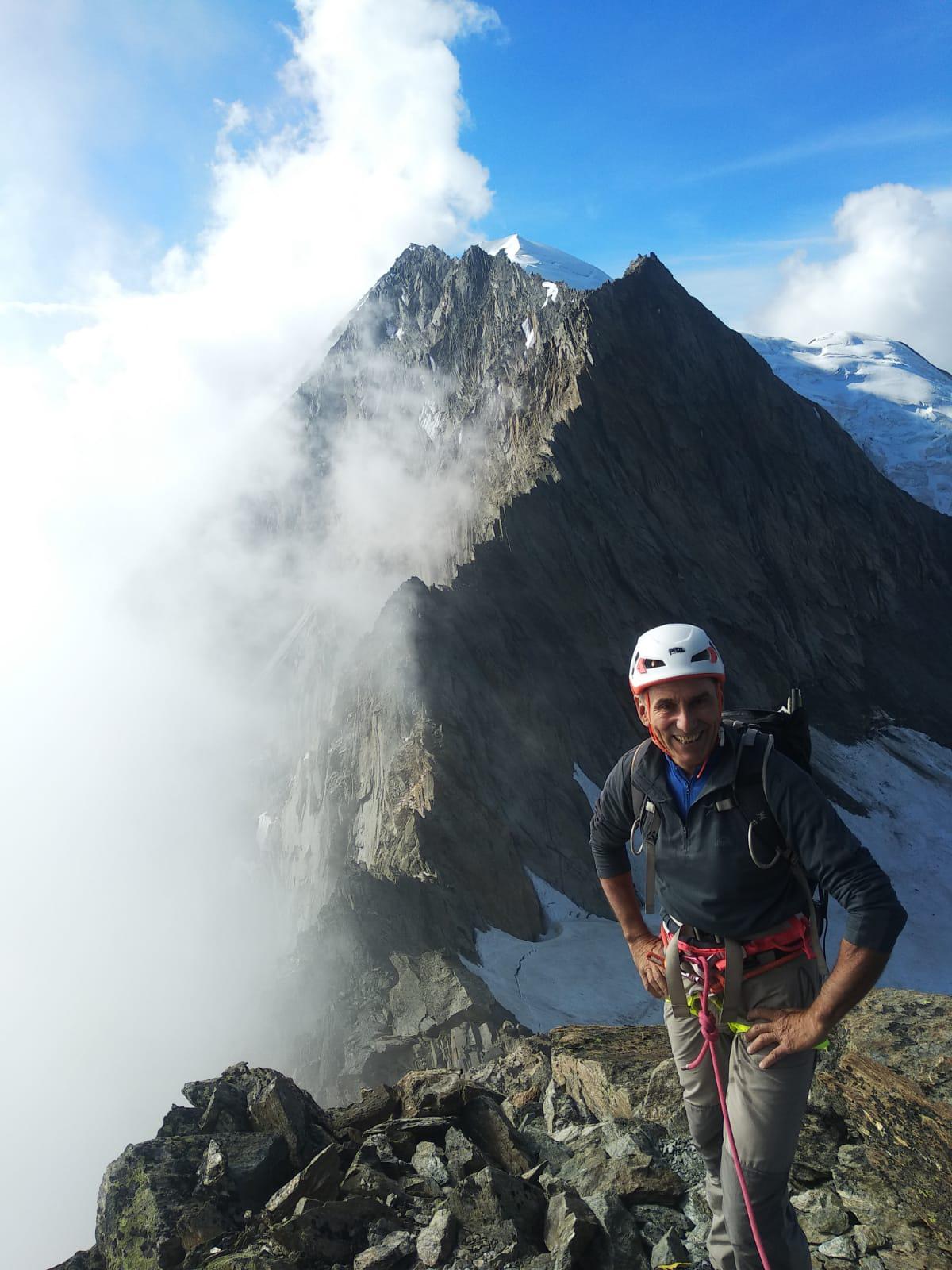
Once in Switzerland, we first climbed the Allalinhorn (4,010 m), a beautiful and easy 4,000-meter peak with the photogenic Trift Glacier, which can be reached quickly from the cable car station used by skiers year-round. On this mountain, we only encountered a few minor crevasses that were easy to navigate. The views were spectacular, and the activity helped with our acclimatization.
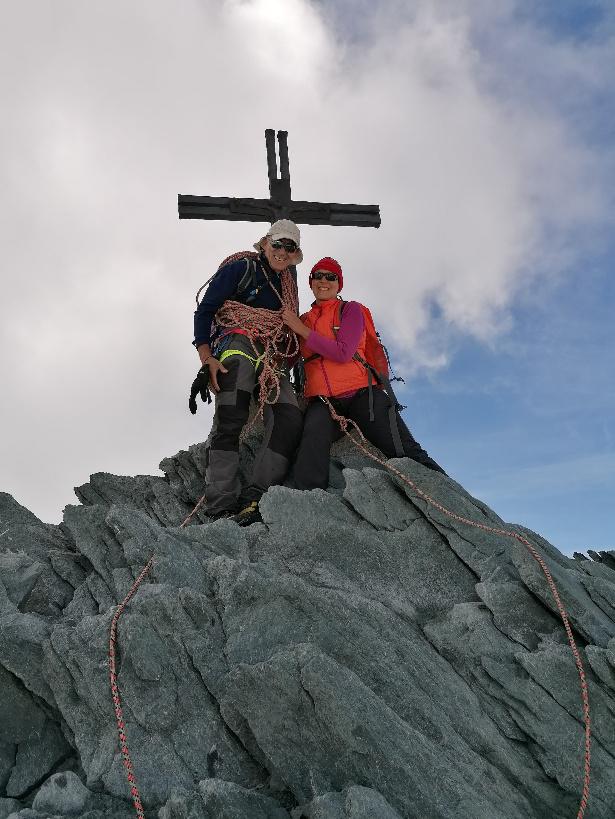
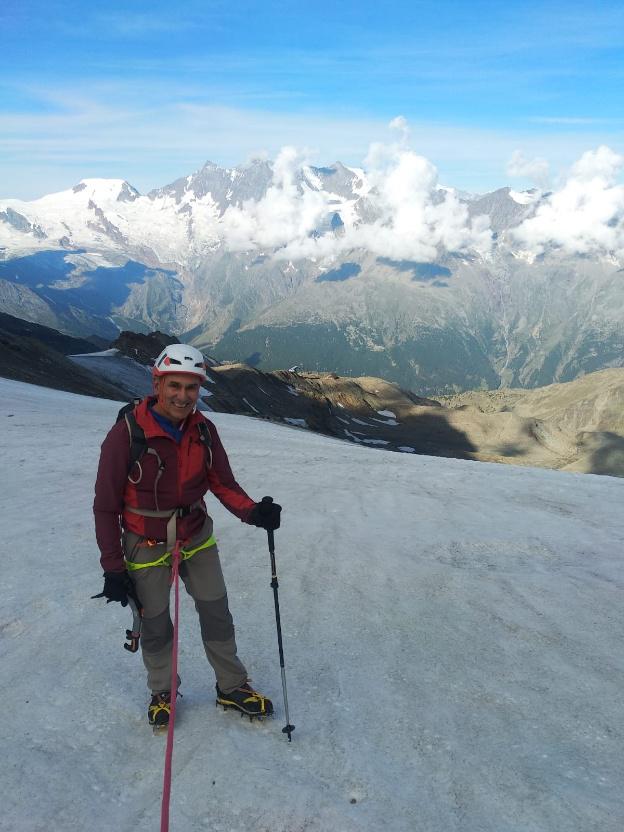
Our next climb was more technical and dangerous, the Weissmies (4,023 m). We were genuinely respectful of this mountain. We passed beneath enormous seracs suspended over a void, following a labyrinthine route between them, avoiding large crevasses that we sometimes had to jump across by placing our ice axe on the opposite edge.
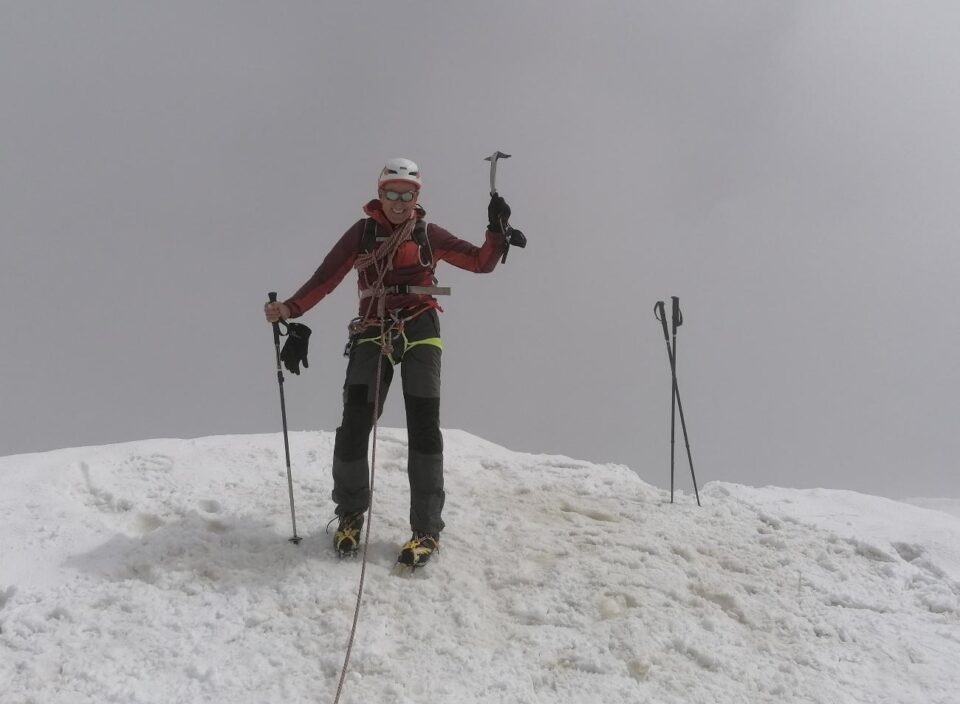
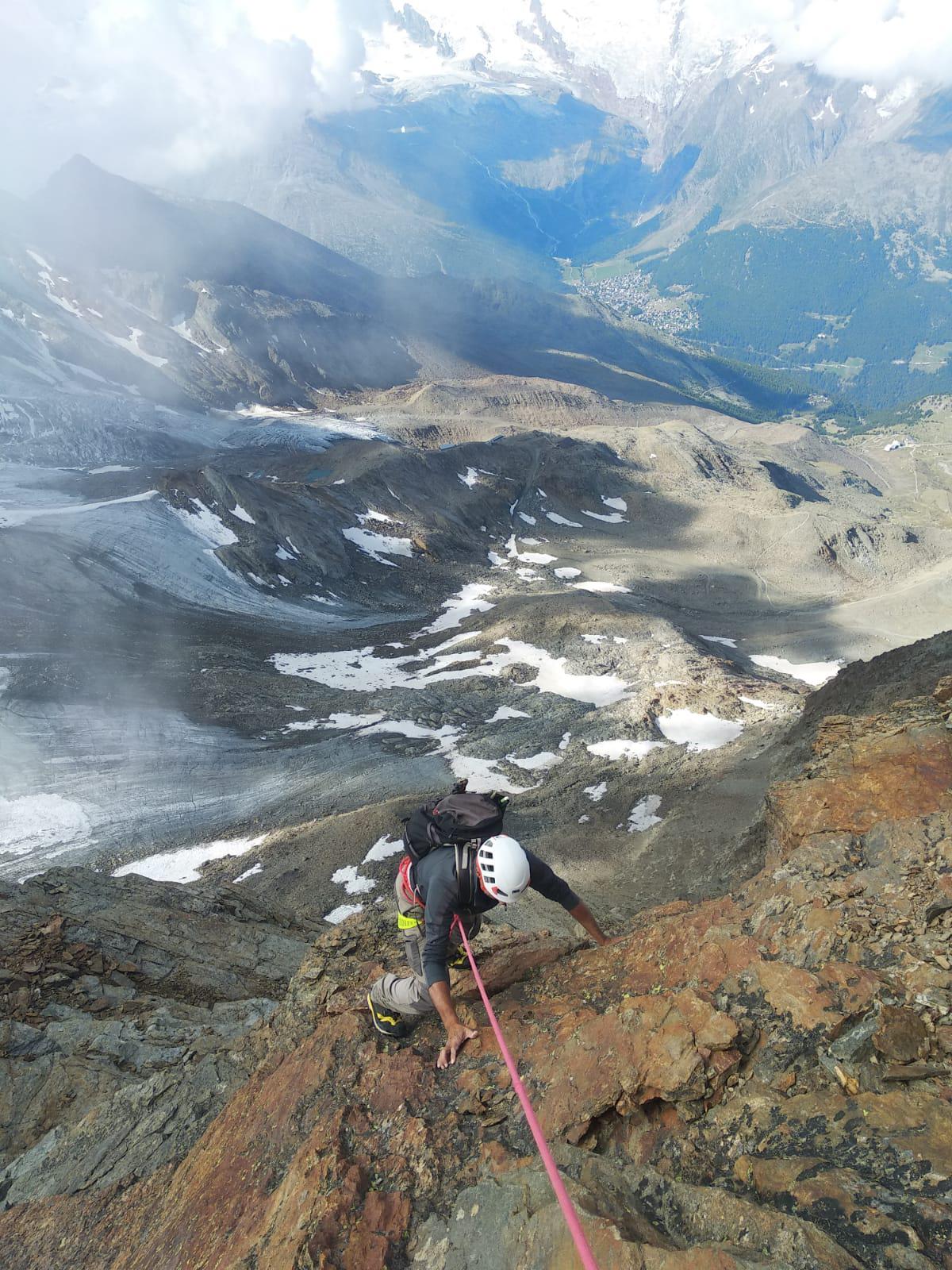
The following day, without pause, I met with a mountain guide who would accompany me on the Matterhorn ascent. We headed to the Lagginhorn (4,010 m), famous for its beautiful east ridge, to test ourselves. The ridge is very exposed, with rock climbing sections of grade IV and numerous scrambles, downclimbs, rappels, and 25-meter abseils. The experience was very rewarding. We worked well together, which gave me the confidence I needed to tackle the Matterhorn.
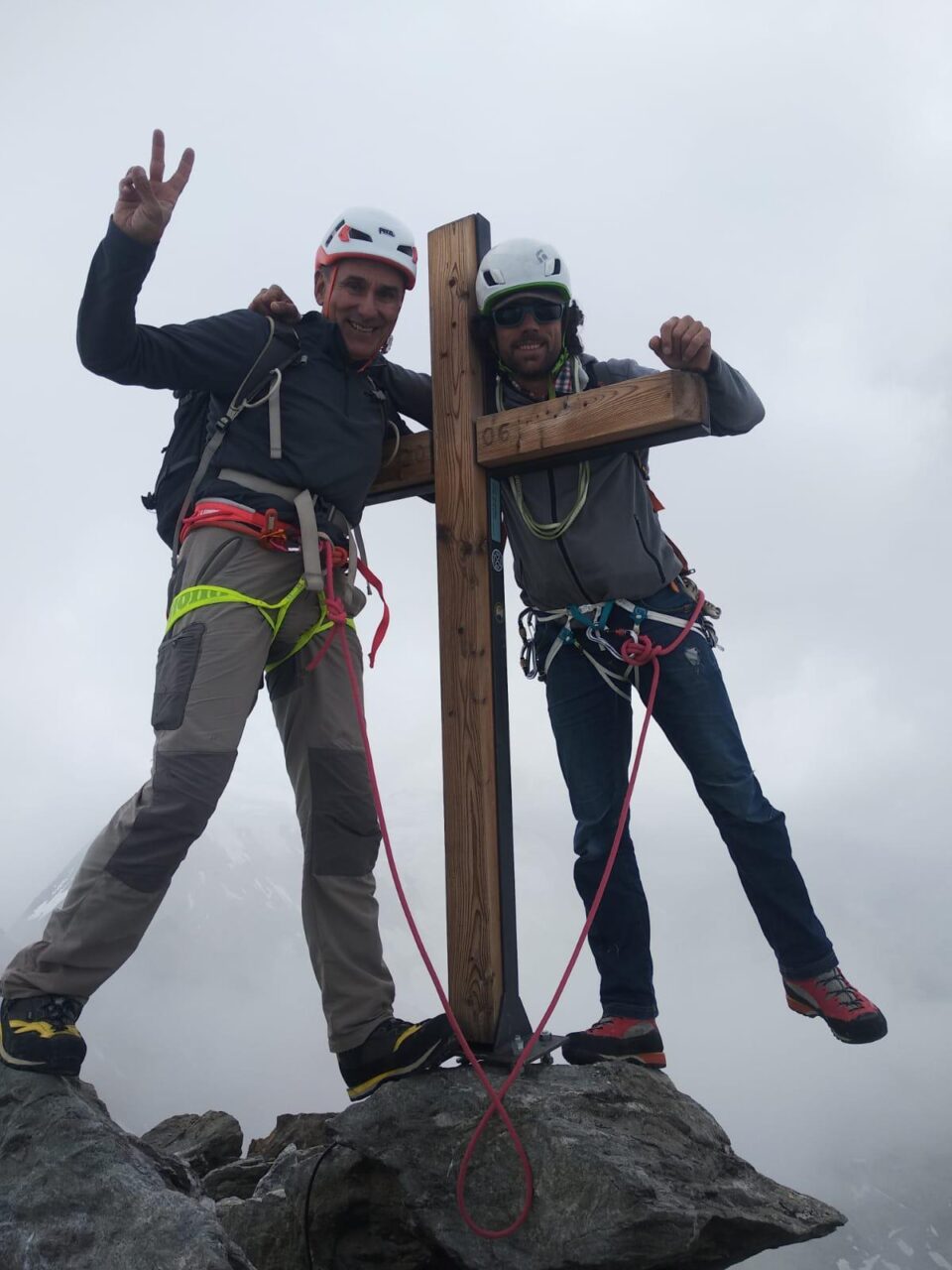
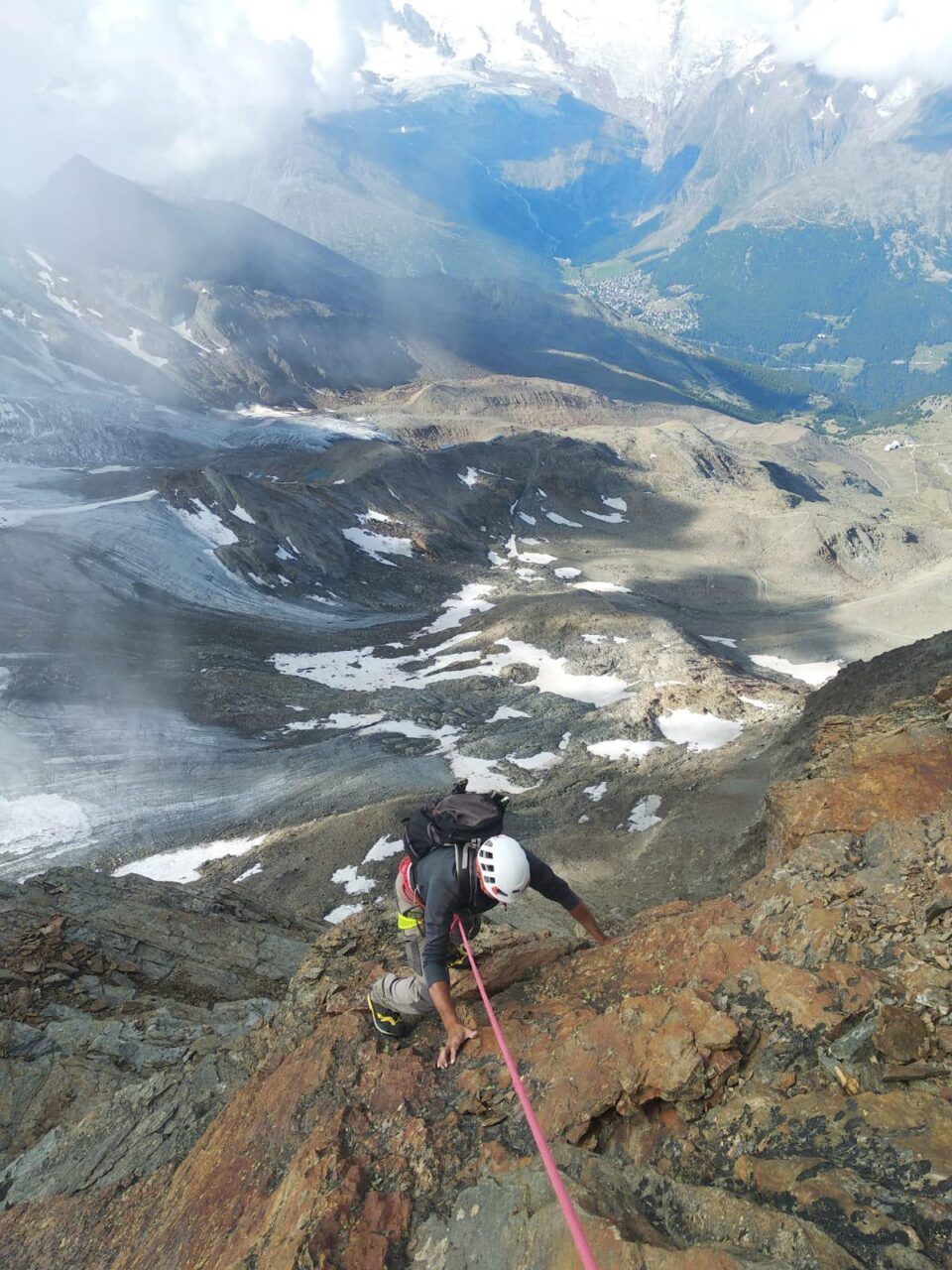
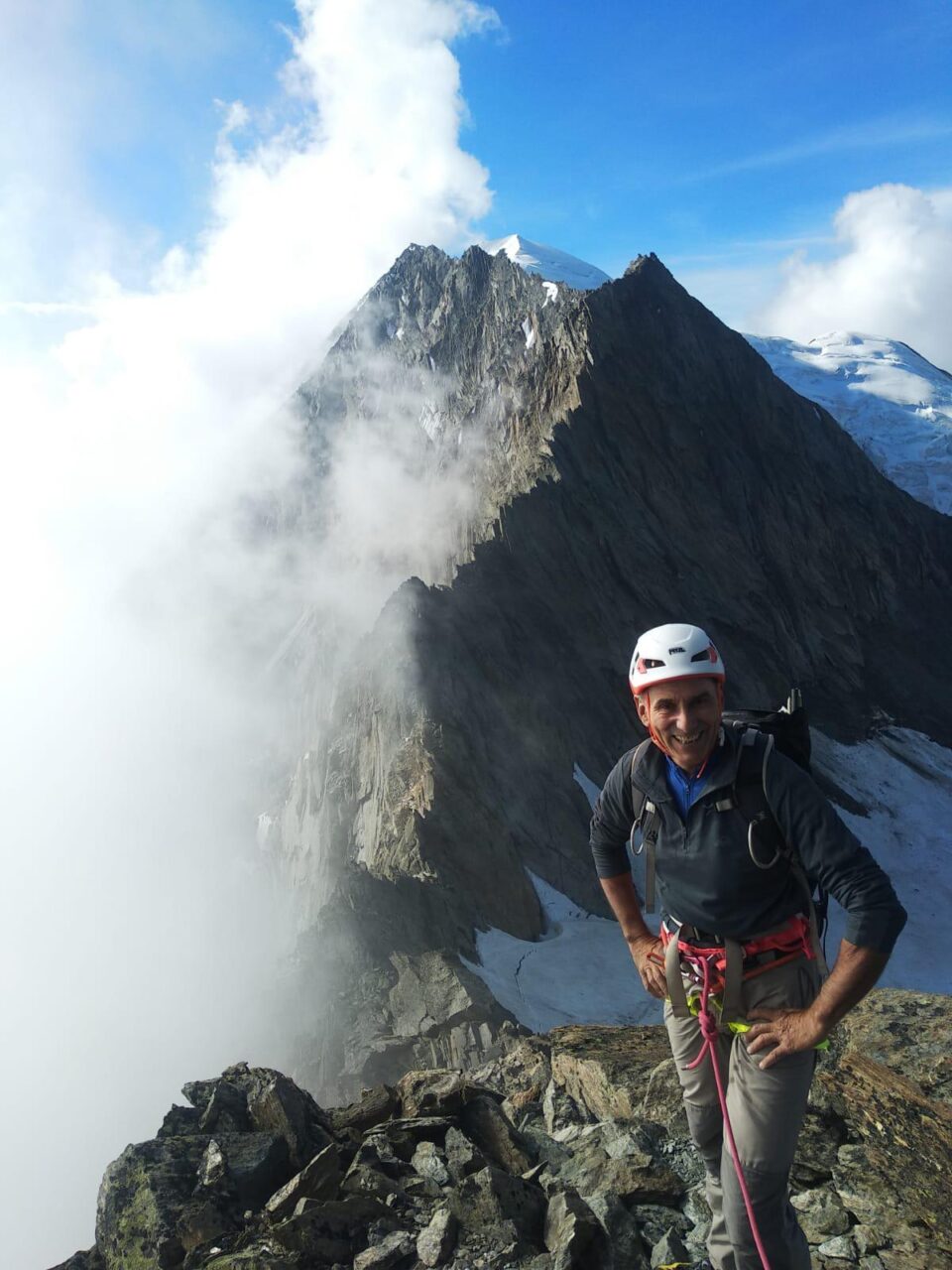
Finally, the day arrived to climb the Matterhorn. Inma accompanied us to the Hörnli hut, where we spent the night. The weather forecast was favorable for the next day, although when we arrived at the hut, a dense cloud prevented us from seeing the summit. I was eager to assess the type of rock I would face, so I asked the guide to start climbing that same afternoon to familiarize myself with the rock. We climbed the Matterhorn ahead of schedule for a while before returning to the hut for the night. This helped build my confidence and dispel fears and insecurities.
The guide had already warned me that at midnight, during breakfast, a hierarchical order would be established for exiting the hut. The previous night, the Swiss guides appointed a leader to signal the start. I understood that the departure order was important, as the first climbers could unintentionally dislodge rocks onto those ascending behind them. During breakfast, I positioned myself as close to the door as possible, keeping an eye on the leader. When he got up, a reflex lifted me, and I took one of the first departure spots. At night, the line remained single-file until the wall, after which everyone set their own pace.
I cannot complain. Although some passed me, I maintained a decent pace. I felt a great responsibility, as my guide told me he needed to descend that afternoon to catch the cable car to Zermatt and drive to Chamonix to guide clients early the next day. His physical condition was remarkable. The idea that my ascent needed to allow my guide to catch the last cable car stayed with me throughout.
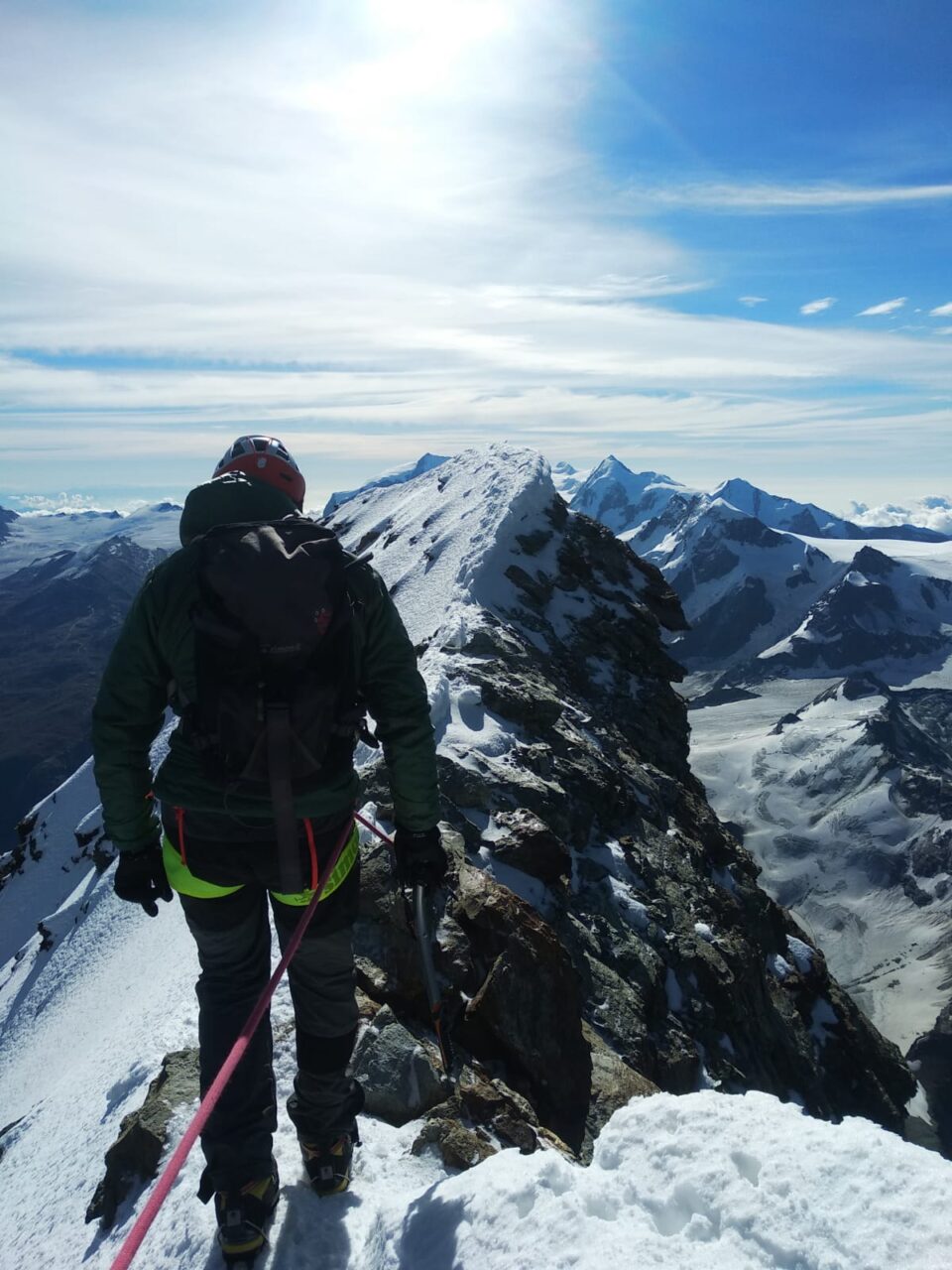
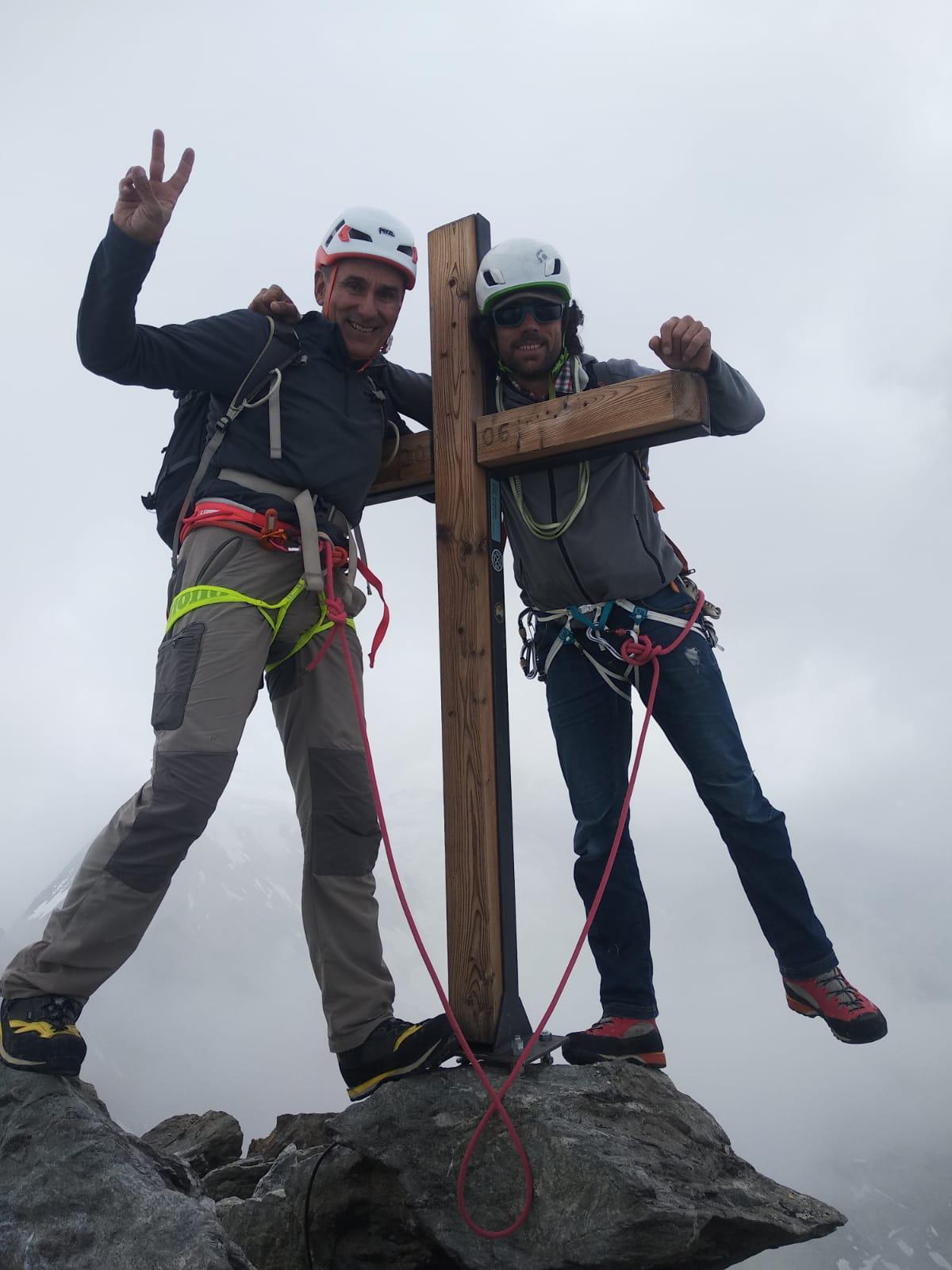
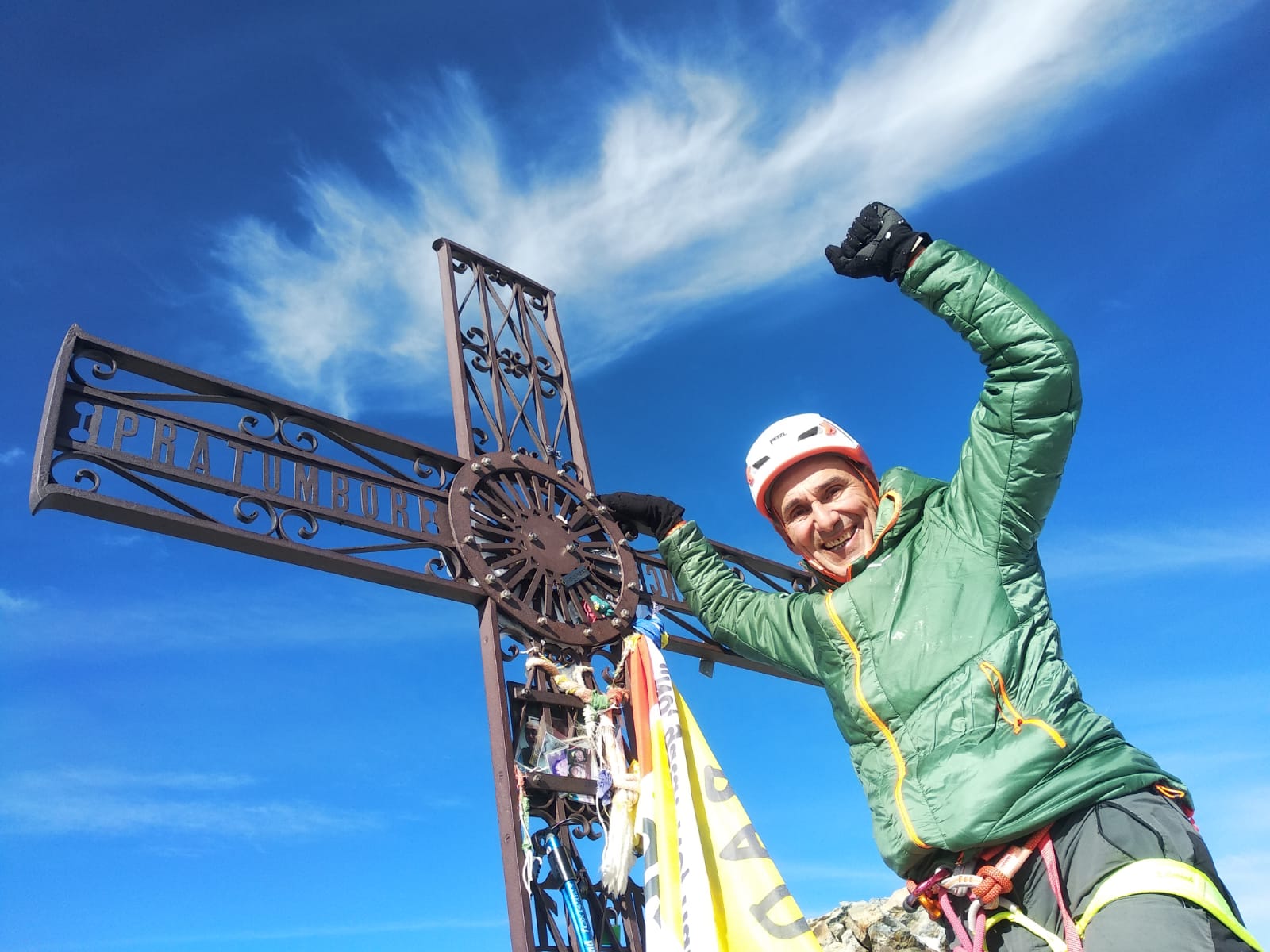
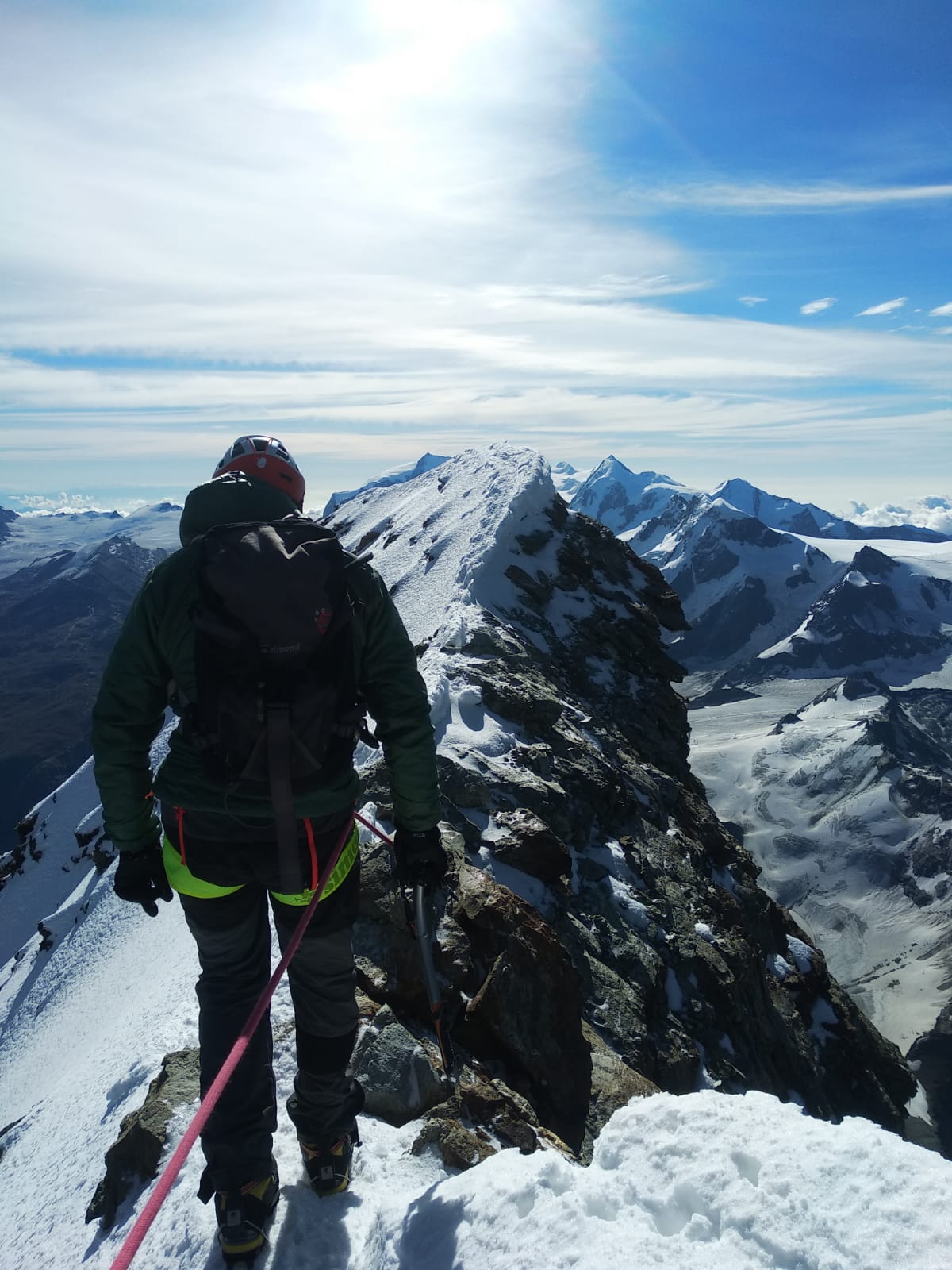
The ascent went smoothly, though I personally found it too fast. I would have liked to stop more to enjoy the experience and the views. There were no interruptions, and we reached the summits without pause. After reaching the Swiss summit, we crossed the sharp snow ridge to the Italian summit’s cross, where we made a brief stop to eat, drink, and take a few photos.
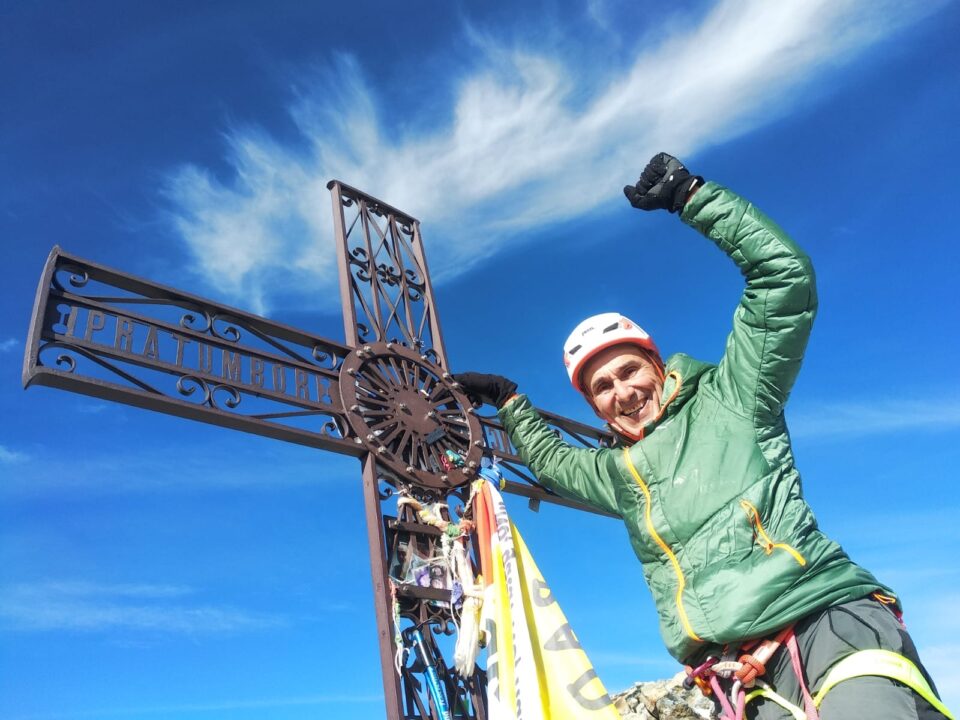
If the ascent was fast for my taste, the descent was even quicker, with one rapid rappel after another. What impressed me most was descending the snowy slope at the top of the Matterhorn. Any slip could mean a 1,200-meter fall down the vertical north face. Seeing the void in front of you while descending that steep slope is an unforgettable image.
Finally, we returned to the hut, with enough time to enjoy a well-earned beer at four-star hotel prices. My guide caught the cable car on time, while I relaxed for the night, preparing for a calm descent the next day.
All the activities described in the Alps were performed with the BESTARD TREK ALPINE FF boots, which proved extremely satisfactory. They caused no discomfort, allowed full freedom of movement, and, despite providing warmth, were flexible enough to maintain balance and control.
I must say that I will always remember the experience of climbing a legendary mountain like the Matterhorn. Although I had climbed higher and more demanding peaks on long expeditions, this mountain tested me in other technical and mental aspects.