

Advanced Hiking: What It Is and How to Choose Footwear Based on the Ground
Advanced Hiking: What It Is and Footwear Advice | Bestard
A forest track, a rocky climb and a descent over uneven ground can all be part of the same walk. On routes like these, choosing footwear based only on distance overlooks an important part of the decision: the ground beneath your feet.
Advanced Hiking addresses this combination of conditions. At Bestard, the range is designed for routes where you want to retain the comfort and flexibility of walking footwear, with additional features for more demanding sections.
To understand when it might suit your outings, consider the route, the expected conditions and your own preparation. Then compare individual models and try them on to assess the fit.

What is Advanced Hiking?
Bestard uses Advanced Hiking to describe a footwear range positioned between flexible walking footwear and more robust trekking boots. It is intended for low- and mid-mountain activities that may include steep, rugged ground and occasional sections without a defined path.
The range combines lightness and comfort with construction that reinforces stability, support and sole durability. Individual models have their own materials, lasts and specifications.
- Intended setting: low- and mid-mountain walks across varied surfaces.
- Main requirement: balancing walking comfort with performance on uneven ground.
- Individual choice: checking each model’s features and how it fits your feet.
How it differs from walking and trekking
“Walking” can describe anything from a stroll along a track to a full day on slopes and uneven footing. The activity name alone provides limited information when choosing footwear.
Two routes of similar length may have different demands if one follows an even path and the other includes a rocky descent. It is also worth distinguishing Advanced Hiking from Bestard’s Advanced Trekking range, which addresses different technical requirements.
- On straightforward paths: assess how much support and protection you need.
- On mixed routes: consider the most demanding sections as well.
- For technical activities: check equipment requirements without assuming compatibility from a boot’s appearance.
Assessing the demands of a route
Distance is only one factor to consider. Montaña Segura’s MIDE system assesses environmental severity, navigation, difficulty of movement and required effort separately. It also records walking times, elevation changes and the season to which the assessment applies.
This distinction helps separate a physically long walk from one that requires greater attention to terrain or navigation.
- Movement: identify tracks, uneven paths and sections without a defined route.
- Effort: check duration, distance and total ascent and descent.
- Environment: establish the level of self-reliance the route requires.
- Conditions: look for recent information and check which season the route description covers.
Fitness and gradual progression: matching the route to your experience
Start with walks you already complete comfortably. Alongside distance, consider elevation changes, terrain and how you feel at the end of the day. A short route on uneven ground presents different challenges from a long walk on a consistent path.
Introduce changes gradually, and always include the descent and return journey in your assessment.
- Use real experience: take recent outings as your starting point.
- Progress step by step: avoid increasing duration, elevation gain and terrain difficulty all at once.
- Monitor recovery: adjust your next walk according to how you responded.
- Consider the group: match the route to everyone’s preparation.
- Separate endurance from technical ability: walking for many hours does not establish readiness for exposed sections or scrambling.
Navigation and self-reliance: knowing where you are and when to change plans
When a path becomes unclear, having a downloaded route is not enough. You need to understand the itinerary, recognise landmarks and know how to check your position. Before setting out, identify potentially confusing sections and options for shortening the walk.
As you go, compare your progress with your planned timings and check whether conditions remain as expected.
- Study the route: locate junctions and changes of direction.
- Prepare your navigation: carry suitable mapping and know how to use your map, compass or GPS.
- Check your app: download maps and confirm that they work without a mobile signal.
- Respond to uncertainty: stop to check your position before continuing.
- Share your plan: tell someone your route and expected return time.
Equipment beyond your footwear: packing for the outing
Duration, the weather forecast and options for returning help determine what to carry. Review these needs even when you know the route.
Montaña Segura’s advice on preparing for a walk includes protection from cold and rain, navigation equipment, water, food, lighting and a first-aid kit.
- Layered clothing: allows you to adjust warmth while walking and during stops.
- Water and food: allow for delays and do not rely on unconfirmed supply points.
- Navigation and communication: carry your planned navigation tools, a charged phone and additional battery power where needed.
- Lighting and emergency equipment: check your headtorch and include a first-aid kit, emergency blanket and whistle.
- Sun protection: choose a hat, sunglasses and sunscreen appropriate to the exposure.
- Walking poles: consider their use according to the terrain and your experience.
- Technical equipment: if you need crampons or a rope, assess training and compatibility separately.
What to look for in Advanced Hiking footwear
Describe your usual outings before comparing models: terrain, duration, pack weight and conditions. Then assess the footwear’s construction as a whole.
Bestard’s guide to choosing the right boot highlights performance for the activity and fit. A single technology does not resolve both questions.
- Sole and structure: check the model’s intended use.
- External protection: identify reinforcements and areas exposed to abrasion.
- Flexibility: assess how the footwear moves with your foot as you walk.
- Lining and materials: check the specific product reference.
- Fit: rule out an option if it does not suit your feet.
Bestard models: understanding differences within the range
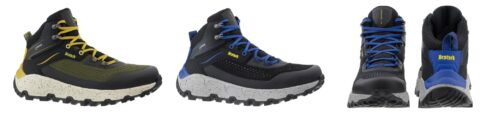
The Advanced Hiking collection includes different designs. Crosswave and Arizona Evo provide examples of variations in materials, lasts and flexibility within the same range.
- Check specific references: the features apply to the model listed.
- Relate components to your use: avoid choosing on appearance alone.
- Try the options: specifications provide guidance but do not replace a fitting.
Crosswave: mesh construction and wraparound protection
Crosswave, reference 0461, features a water-repellent Tech Mesh and TPU upper with wraparound protection. Its cuff is designed to combine support with freedom of movement.
- Lining: GORE-TEX® Most Breathable.
- Last: X20.
- Insole board: Bestflex 3 / Normal.
- Sole unit: Vibram® Bruce + EVA; the description specifies Megagrip compound.
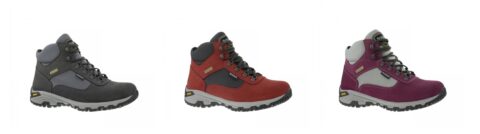
Arizona Evo: leather and a flexible construction
Arizona Evo, reference 5202, combines water-repellent 2.2 mm Perwanger® leather and Cordura®. Bestard lists walking and light trekking among its uses, alongside travel and everyday wear.
- Lining: GORE-TEX® More Seasons.
- Last: Europa.
- Insole board: Bestflex 2 / Flexible.
- Sole unit: Vibram® Tubava + EVA; the description specifies Megagrip compound.
Checking the fit before choosing
Your usual size is a starting point, but it does not describe the width, volume or shape of your feet. Take time to walk in the footwear, adjust the laces and check what happens as you shift your weight.
If you need to overtighten the laces to hold your foot in place, try another option.
- Socks: wear those intended for the activity.
- Heel: check that it is held securely without excessive movement.
- Toes: make sure they have room and do not hit the front.
- Instep: look for a secure hold without uncomfortable pressure.
- Last: compare alternatives if the fit does not feel right.
Maintenance for future walks
Checking footwear after an outing helps you identify dirt, wear or damage before the next walk. Follow Bestard’s maintenance advice and use products compatible with the materials.
- Remove the insoles and allow the footwear to dry naturally.
- Avoid radiators, fires and other sources of intense heat.
- Clean according to the manufacturer’s instructions.
- Check soles, laces and joins before wearing the footwear again.
Choosing Advanced Hiking footwear starts with understanding your routes and your preparation. Then compare features and assess the fit until you find an option suited to the activity.
Frequently asked questions
What does Advanced Hiking mean at Bestard?
It is a range for low- and mid-mountain walks that require more support and stability than some flexible walking footwear provides, without needing a robust trekking boot.
Are Advanced Hiking and Advanced Trekking the same?
No. They are separate ranges. Features and compatibility should not be assumed to apply to both.
Is there a minimum walking time or elevation gain for Advanced Hiking?
Bestard’s definition of this range does not set those thresholds. Terrain, effort, conditions and self-reliance should be assessed together.
Do all boots in the range have the same flexibility?
No. Arizona Evo 5202 specifies Bestflex 2 / Flexible, while Crosswave 0461 uses Bestflex 3 / Normal.
Can I use crampons with any model?
Do not assume compatibility. Check the footwear model, crampon system and manufacturer’s instructions.
Does an outsole with good grip prevent slipping?
No. The surface, slope, wear and how you place your feet all affect grip.