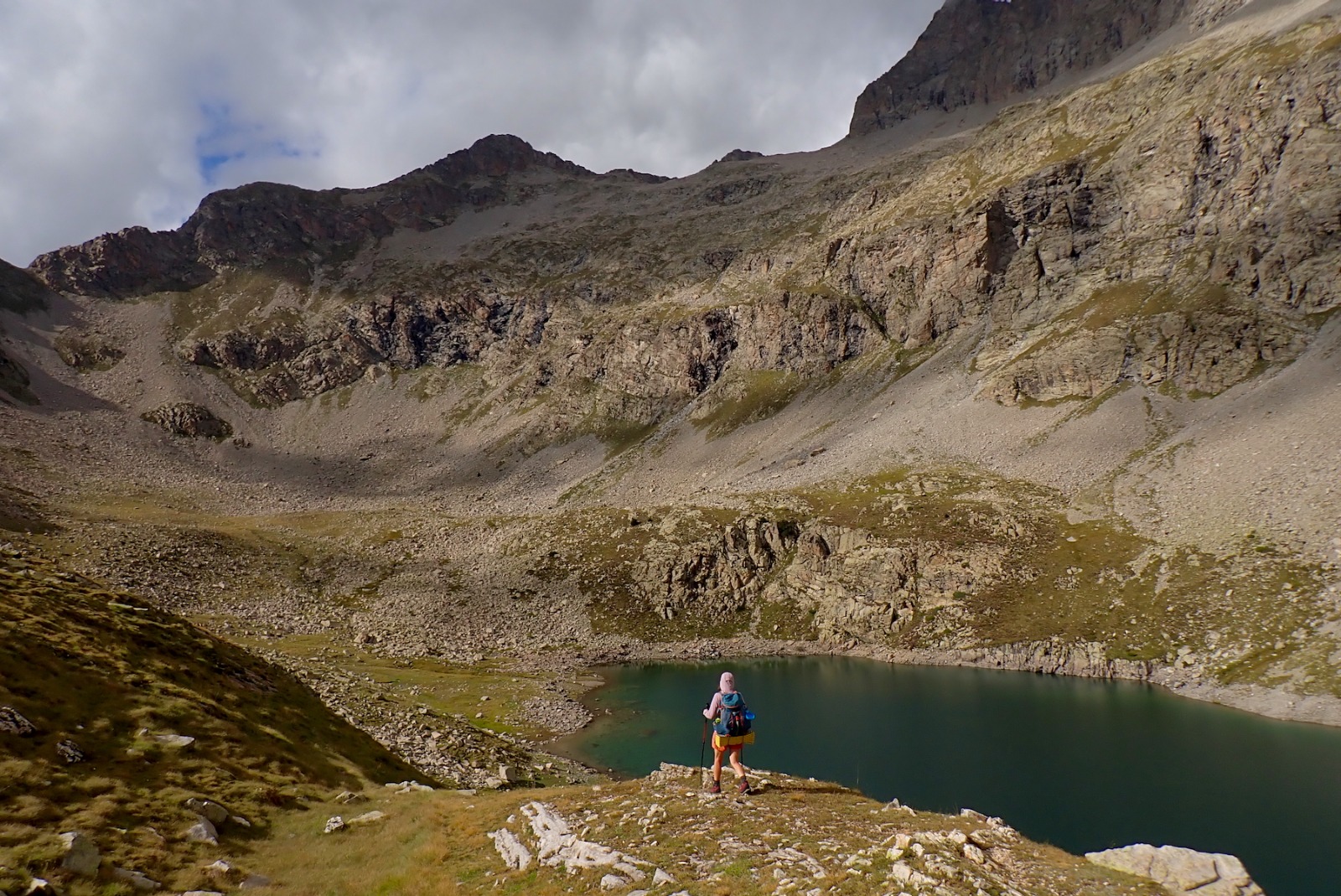
Slow Mountain by Sergio Fernández Tolosa and Amelia Herrero Becker
SLOW MOUNTAIN MOUNTAINEERS WITHOUT HURRY
After several summers enjoying the Pyrenees with large backpacks and small maps, we have gathered 10 lessons that may prove useful when planning a multi-day mountain trek at a contemplative pace, far from the noise of everyday life and in complete self-sufficiency
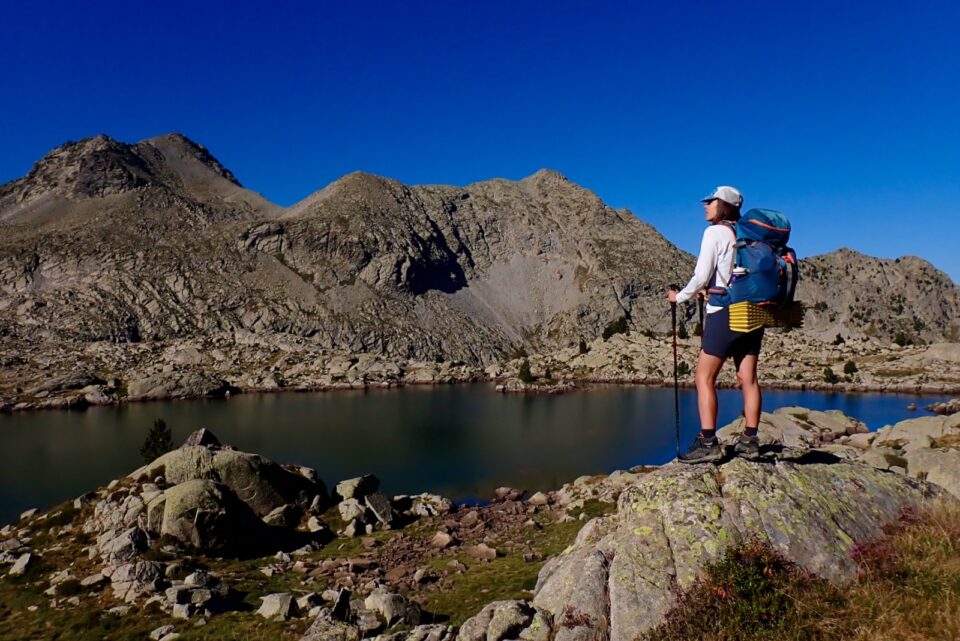
Text and photos: Sergio Fernández Tolosa & Amelia Herrero Becker
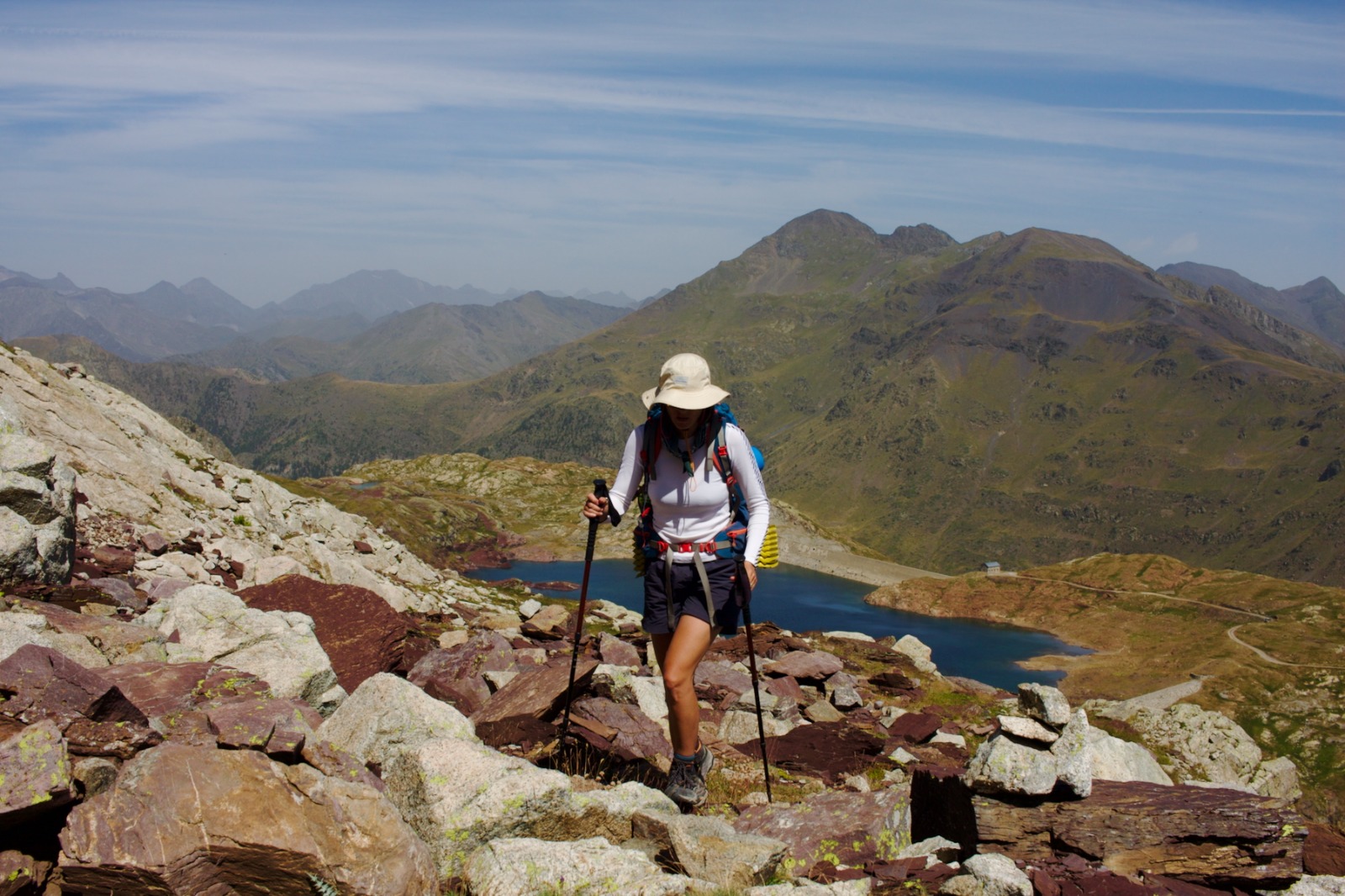
Slow mountain, mountaineering without hurry, champions the idea of experiencing the mountains without stopwatches. It doesn’t matter whether the route is short or long. Here, neither speed, elevation gain, nor the number of summits conquered are measured. It is, essentially, about slowing down and observing. About disconnecting and allowing the most obvious and natural things to unfold in all their magic before our eyes. It is our favorite way to experience the mountains because it allows us to spend more time up there. Always, of course, respecting the sacred principles of Leave No Trace.
A single book can have as many interpretations as it has readers. The same is true of mountains. Some seek difficulty. Some seek records. Some seek landscapes. Wildlife. Flora. Fresh air. And some seek only time.
1º KILOMETERS, MORE TIME
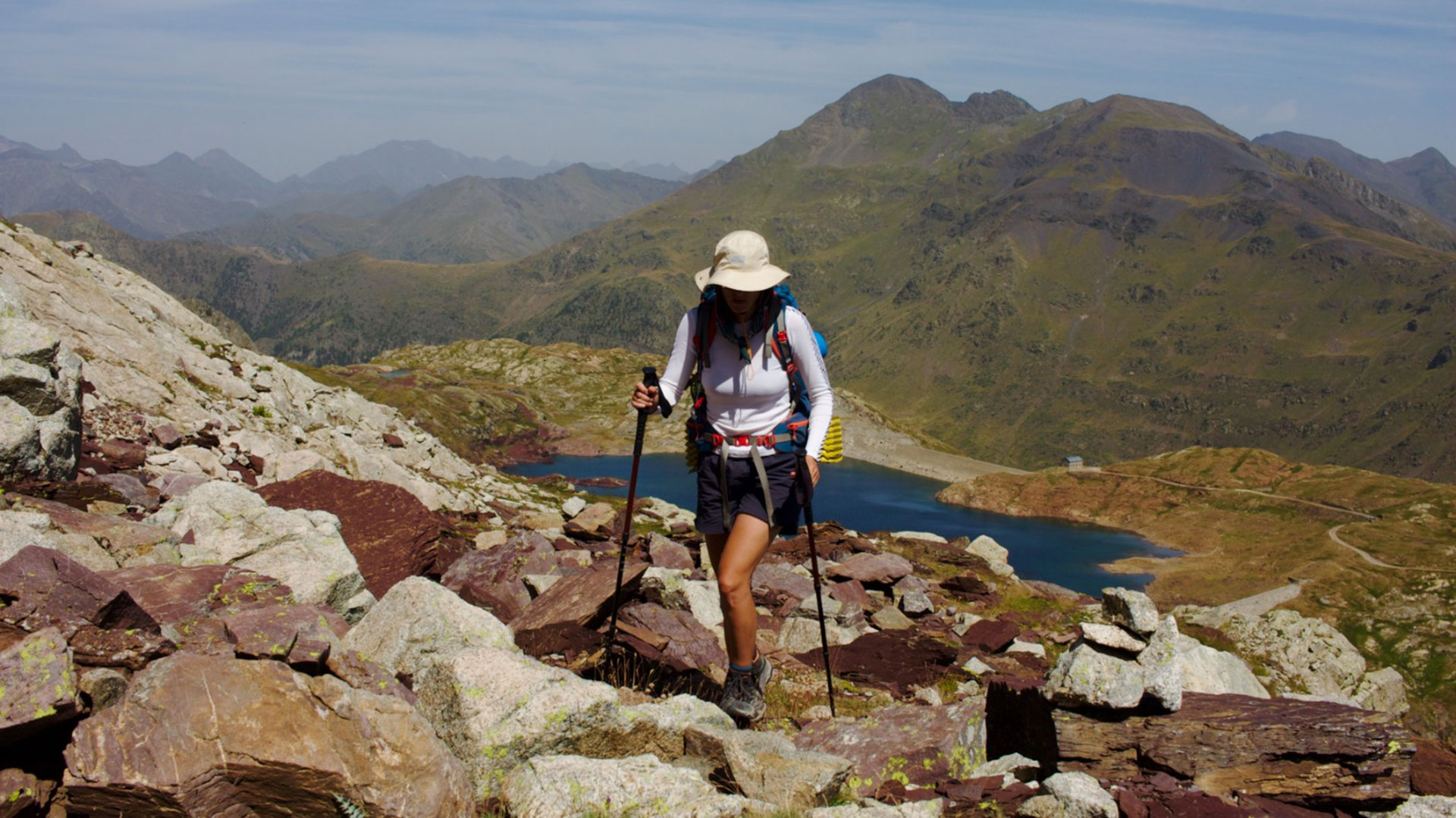
When planning a hiking trip or a multi-day mountain traverse, one of the most common mistakes is trying to cover a vast area despite having limited time. Instead, if we reverse the equation, reduce the territory and allocate more days to it, we gain more time to explore, contemplate, and understand it while calmly enjoying every detail: flowers, plants, animals, insects, fish, rocks, clouds…
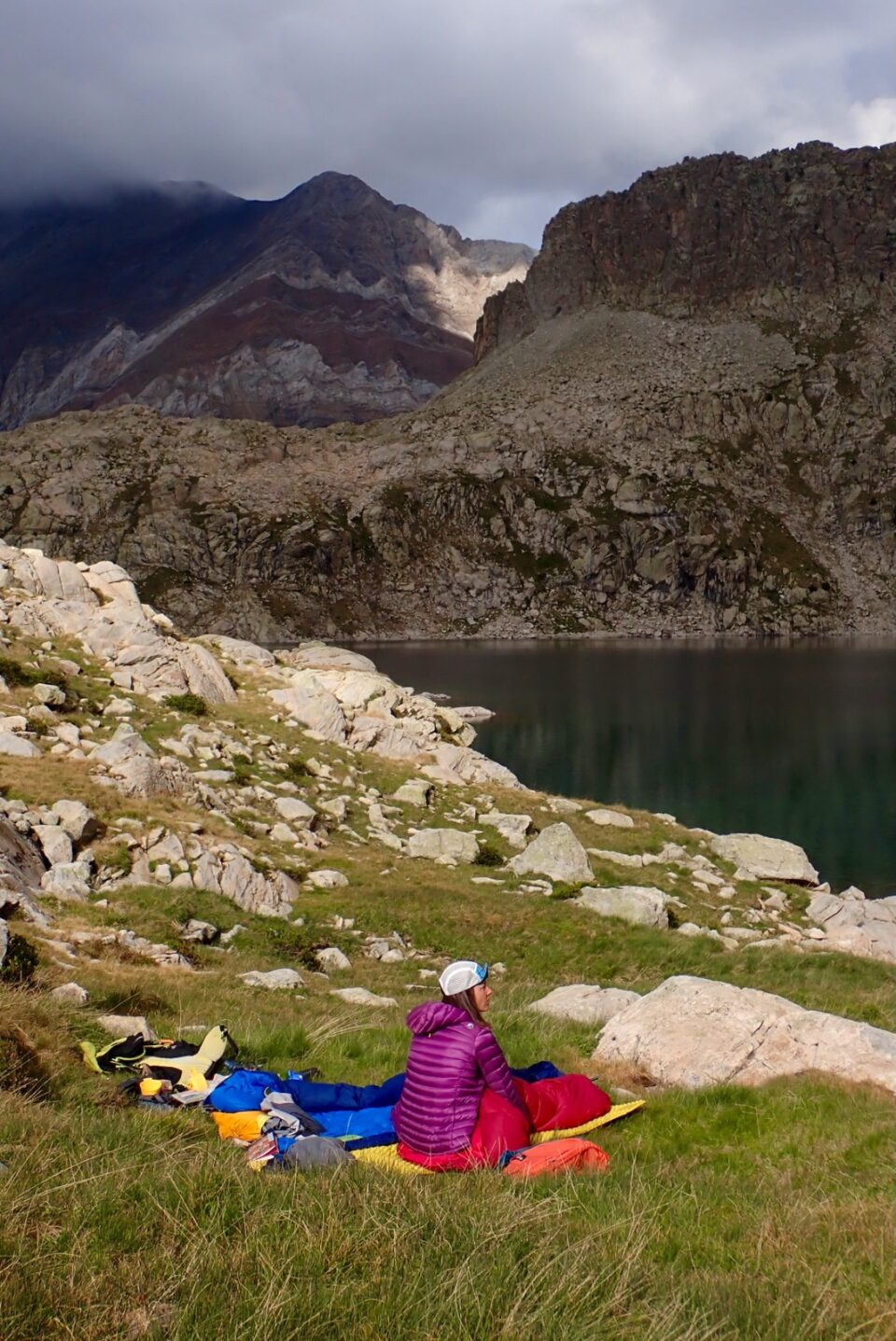
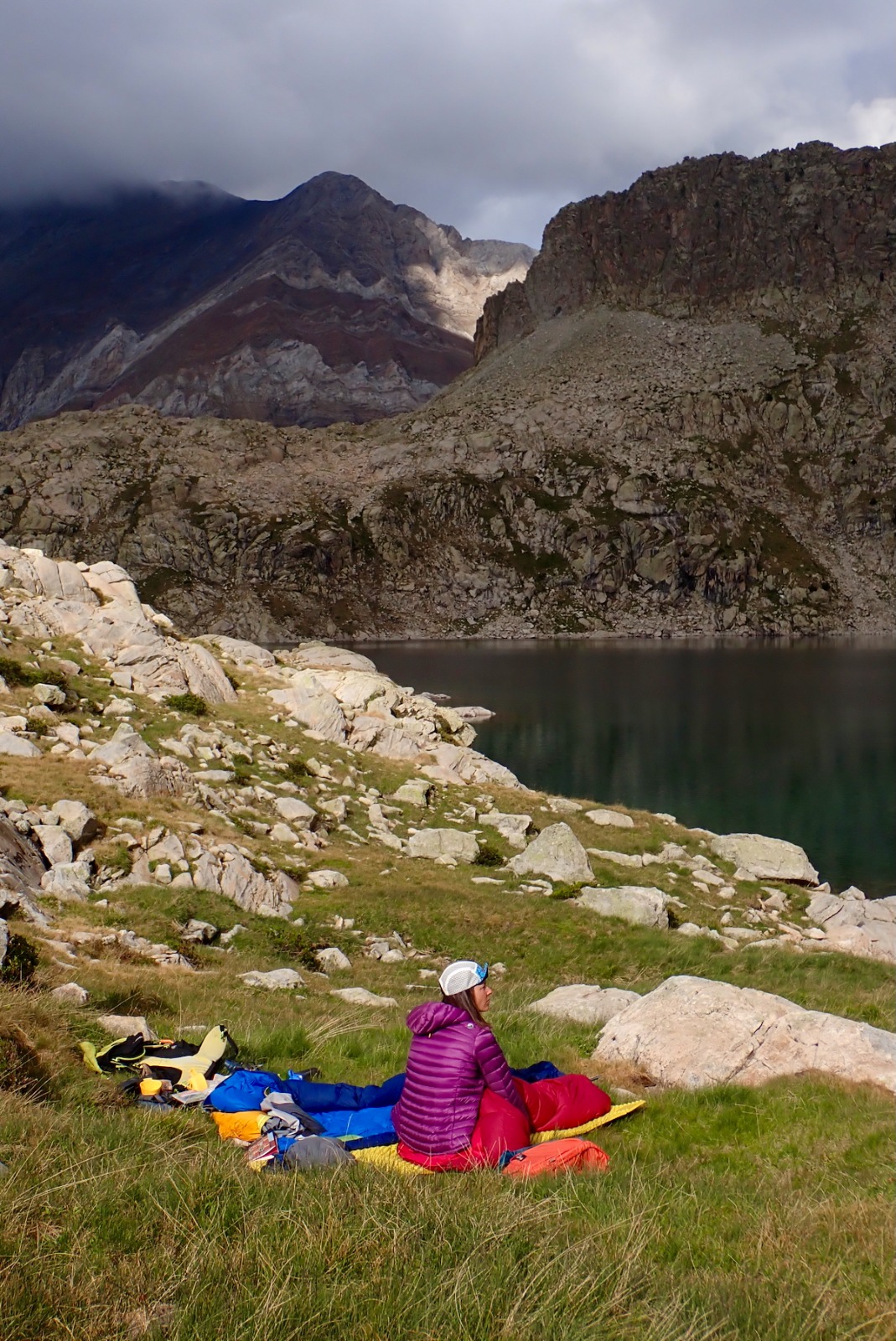
As a general rule, when designing a route, we calculate between 10 and 15 km and around 1,000 meters of cumulative ascent per day. Naturally, there are days when we have hours to spare, but that is exactly the point. We use that time to rest in a beautiful place, read, drink tea, watch the sunset from above…
For example, judging by distance and elevation gain, the route around the Pixón, La Solana, Lleners, and Millars mountain lakes in the Posets-Maladeta Natural Park can be completed in a single day, but it becomes far more rewarding when stretched over two or even three days.
2º LESS POPULAR AREAS
We all enjoy going to the mountains and encountering few people, especially when our goal is to contemplate nature in its purest state. To achieve this, it is best to avoid the busiest days, usually weekends, as well as the most popular valleys and regions, the highest and most accessible summits, and places with easy access, such as nearby parking areas or staffed mountain huts.
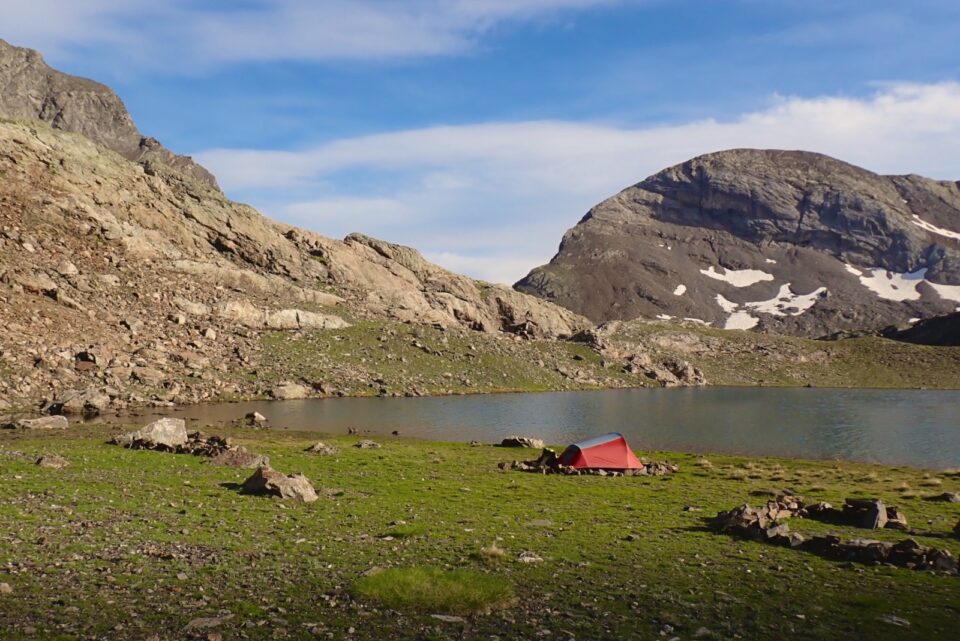
Strange as it may seem, you do not always have to go far. Sometimes, the valley next to a highly touristy area can be a haven of silence. You may not find these places on lists of “the ten best hikes you must do before you die,” but the experience can be far more genuine, even if they are less spectacular and few people have ever heard of them.
One example is the Punta Suelza Circuit or the ascent of Punta Fulsa from Bielsa in the Aragonese Pyrenees. While crowds head up the busy valleys of Pineta and Barrosa or make their way toward the sharp summit of Robiñera, a profound sense of calm can be found on the other side of the Cinca River.
3º THE IMPORTANCE OF TRAINING
Slow means slow, but not necessarily easy. Physical preparation is essential for mountaineering, especially if we intend to be self-sufficient for several days, carrying at least food, warm clothing, and bivouac equipment.
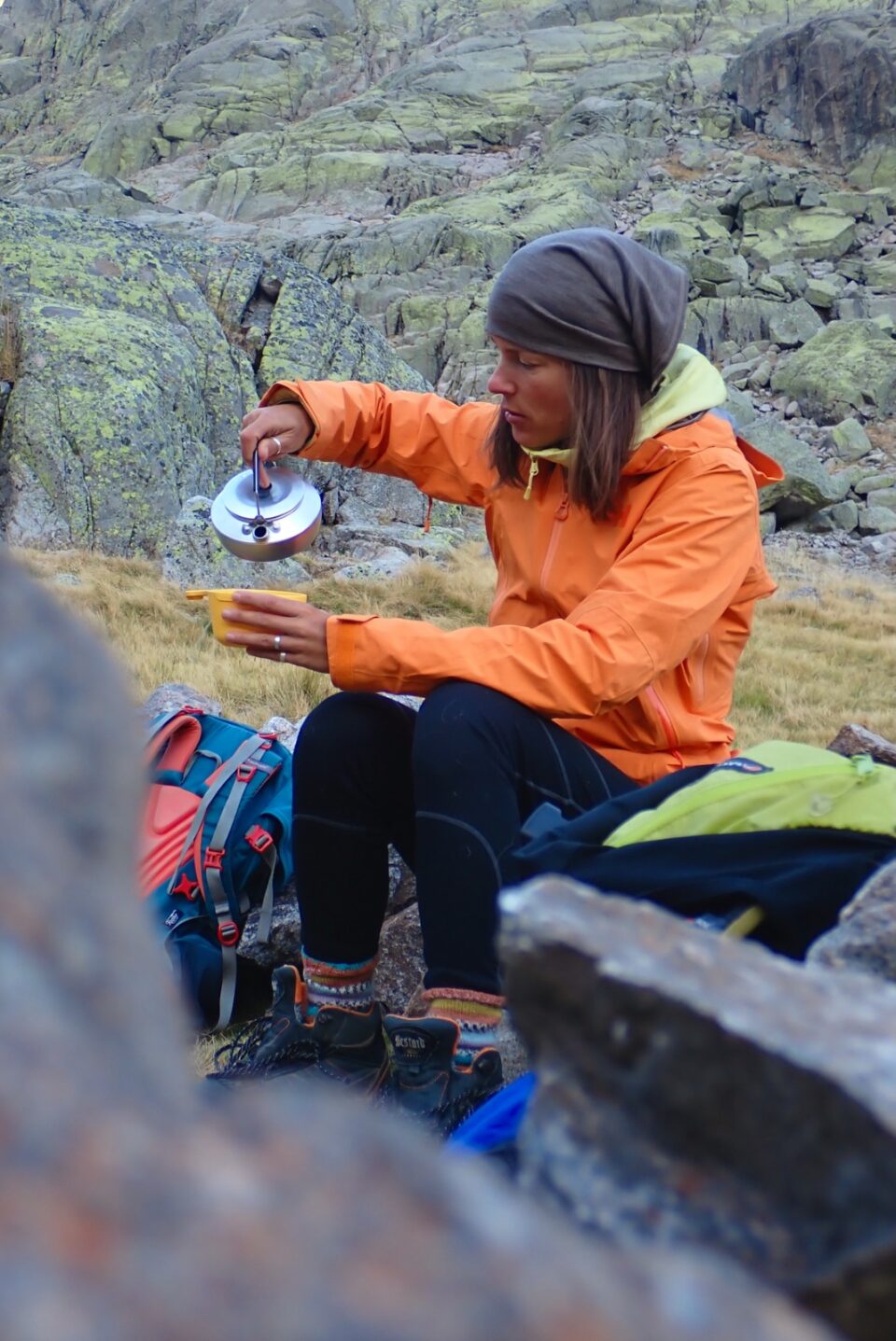
It is important to remember that in the mountains, not only the legs work; the entire body does. Therefore, training strength, mobility, flexibility, endurance, and even metabolism is crucial, since we cannot eat as much or as frequently as we can when we are close to a pantry, supermarket, or food-delivery app.
4º-SUFFICIENCY = FREEDOM
Moving through the mountains with ultralight gear certainly has its advantages. However, being self-sufficient allows us to remain in direct contact with nature 24 hours a day.
By carrying all our food, clothing, and camping gear up the mountain, and bringing all our waste back down, we move more slowly, but we gain greater freedom. Without having to rely on mountain huts, we can improvise, change routes, stop wherever we like…
5ºTHE WEIGHT OF THE BACKPACK
Freedom comes at an unavoidable cost: backpack weight.Water can usually be found along the route, but even the most Spartan hikers should allow roughly 800 grams of food per person per day.
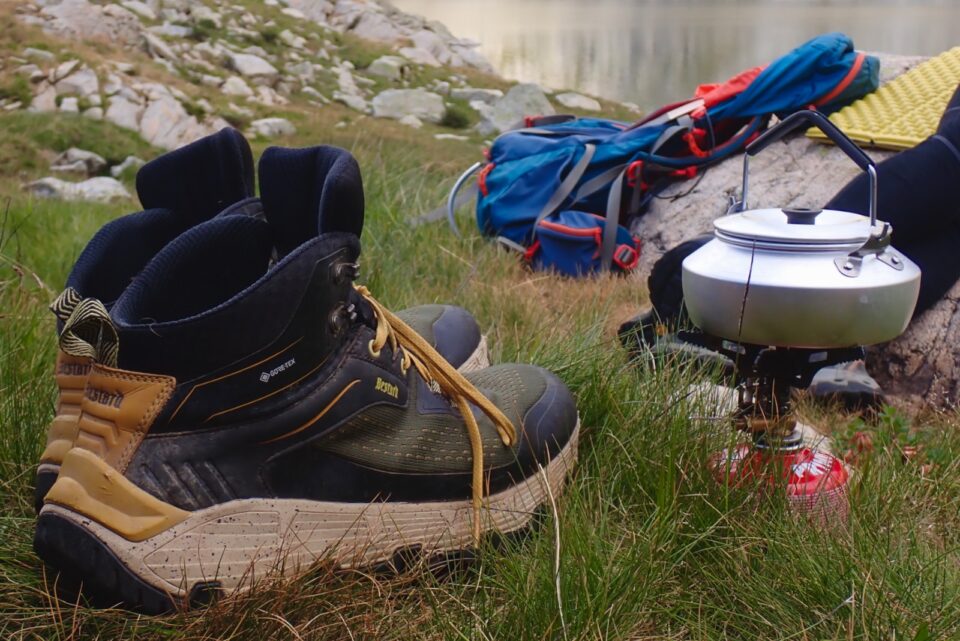
To prepare bivouac meals that are lightweight, nutritious, and require little fuel to cook, careful planning is essential. It helps to experiment at home and train your body to adapt to this type of food.
Through trial and error and by reading nutrition books, we have learned what works best for us: oatmeal porridge, nuts, dried fruit, and seeds for breakfast; couscous mixed with dehydrated vegetables and meat, canned fish, or plant-based proteins for dinner; cured meats, beef jerky, and ham at lunchtime; protein bars to supplement the diet; herbal teas and instant coffee, among other staples.
6º WATER
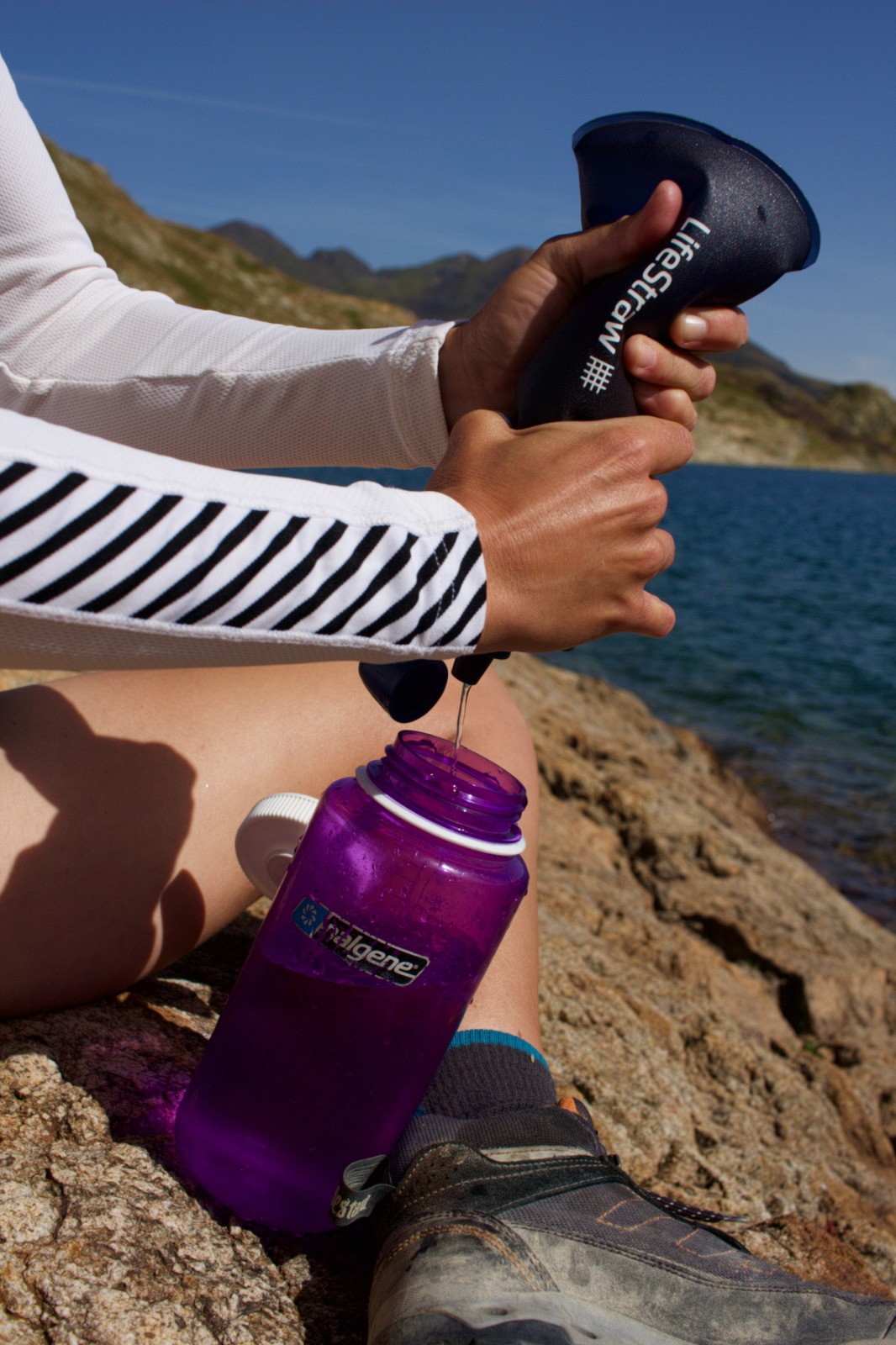
To purify water from streams, mountain lakes, and springs in the Pyrenees, we have used a filter soft flask for years. It is the lightest and fastest system we have tried. If the membrane is new or freshly cleaned, it can filter nearly a liter of clear water in a couple of minutes. If it is dirty or the water contains sediment, the process takes considerably longer. In any case, we always carry a few chlorine dioxide tablets as a backup.
7ºFOOTWEAR AND TREKKING POLES
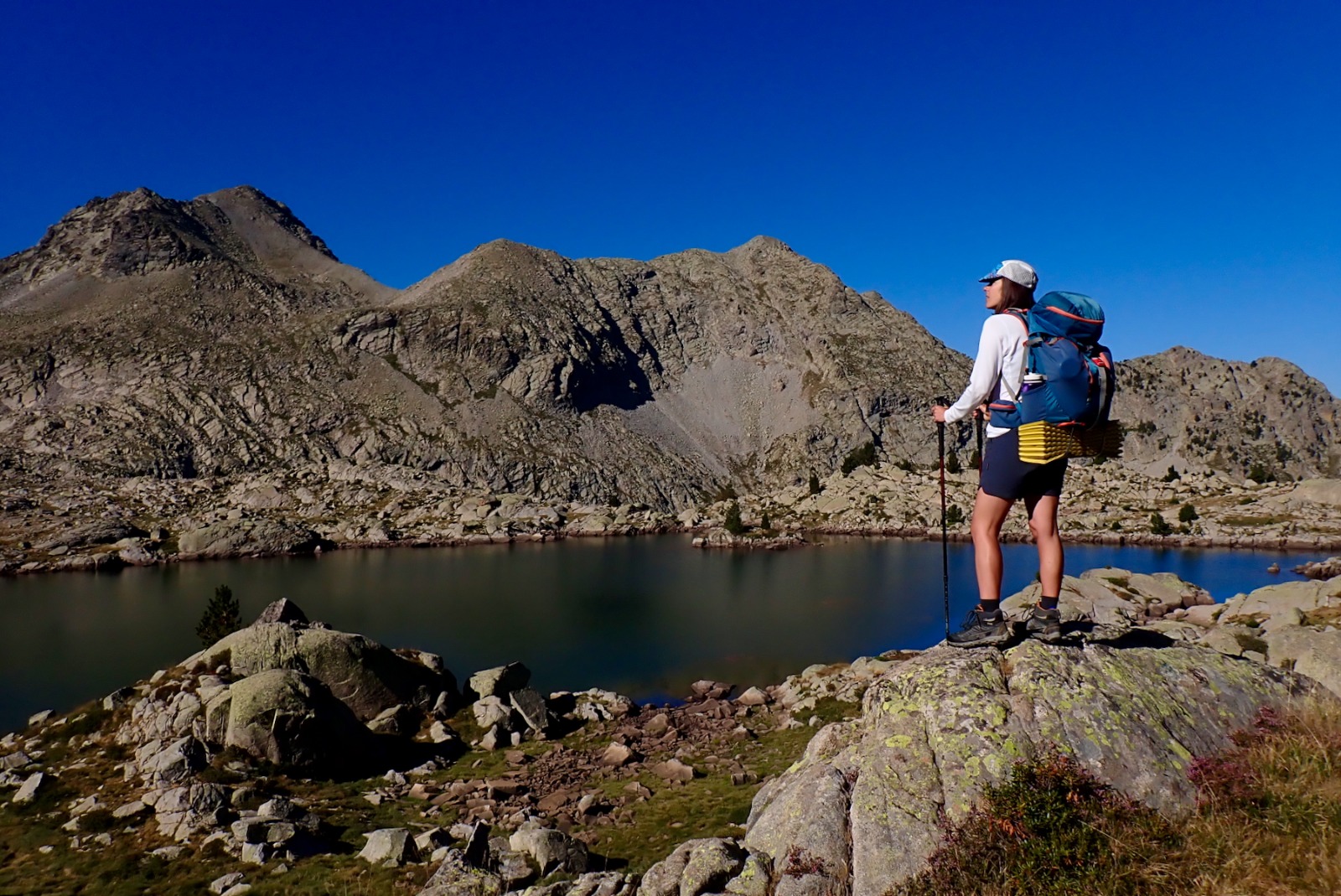
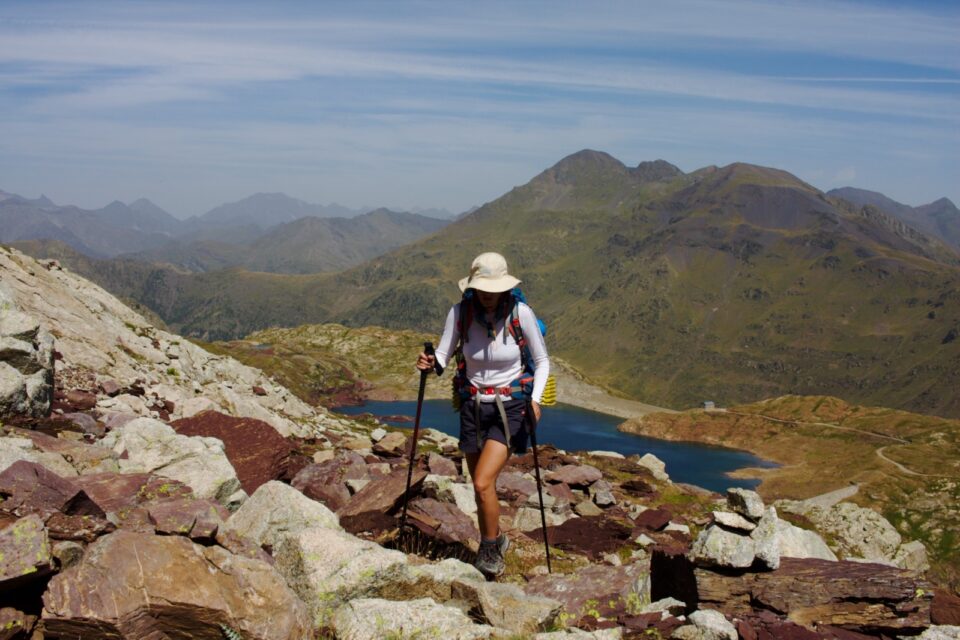
The weight of a large, fully loaded backpack affects every movement and inertia of the body. This becomes especially noticeable on rough terrain, mountain trails, or off-trail sections. Whether climbing, descending, or crossing streams and balancing on rocks, trekking poles are reliable allies.
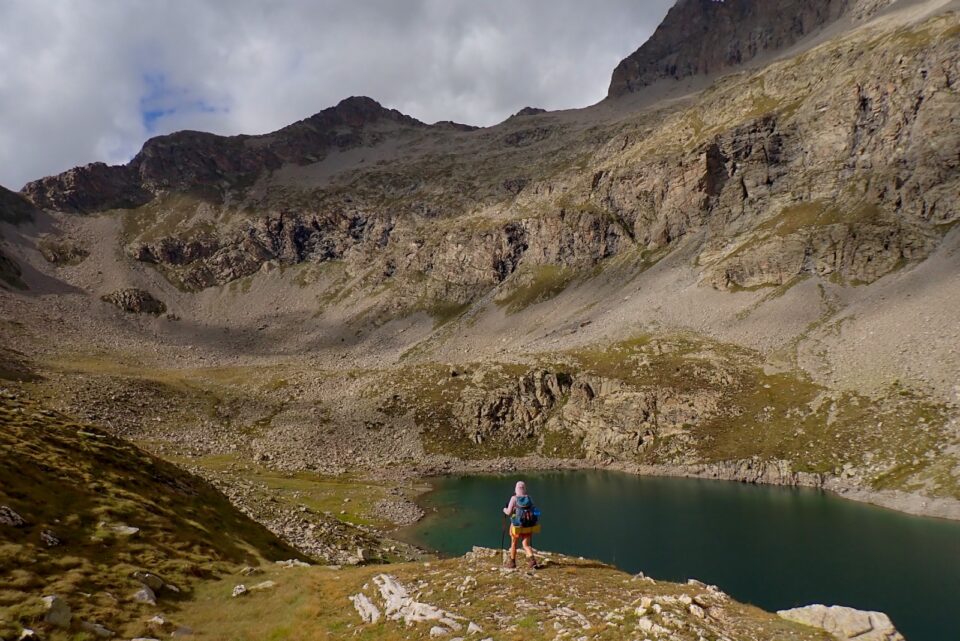
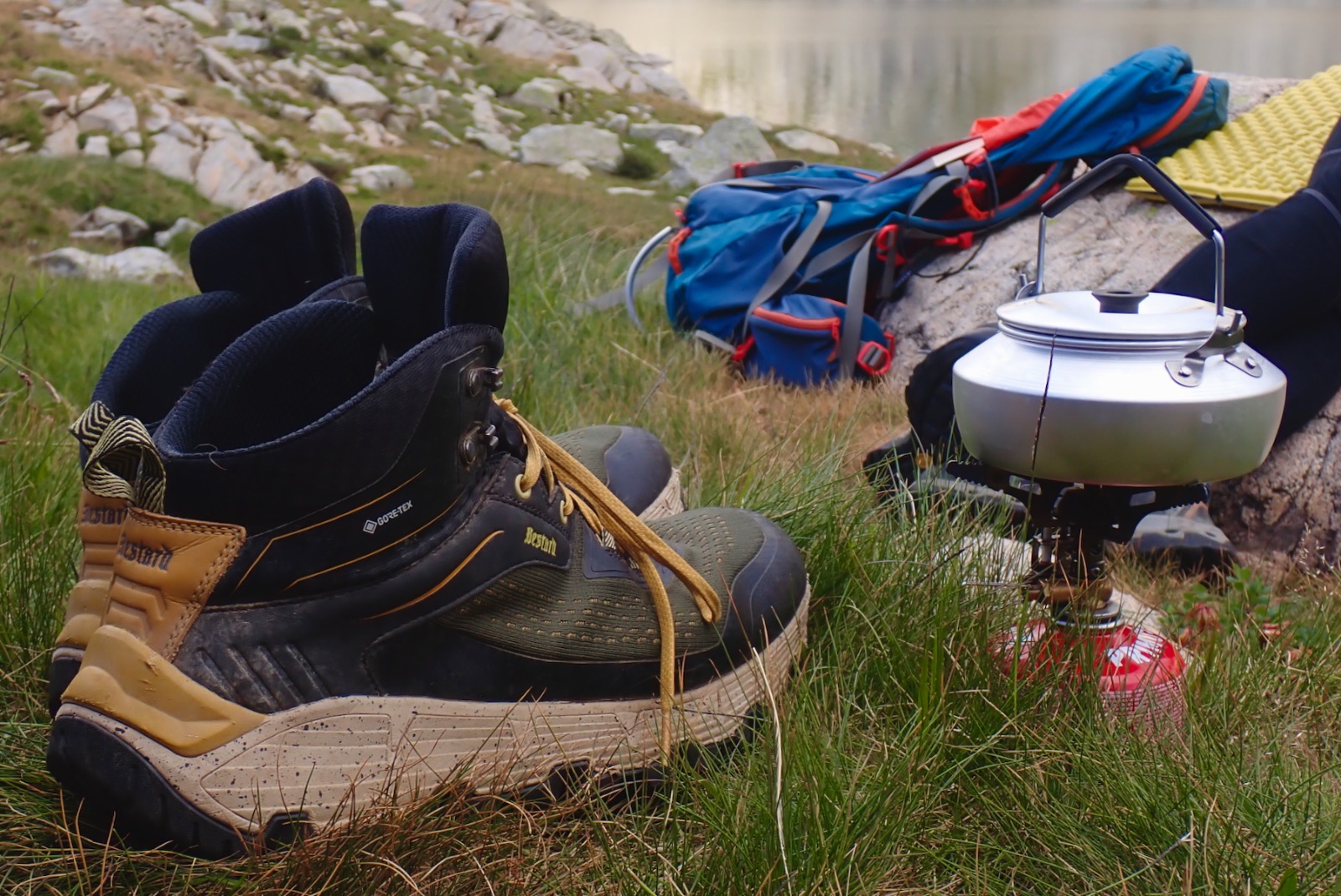
Footwear choice is highly personal, but when carrying a large pack, experience has led us to prefer more stable and supportive models, even if they are heavier. This is something we learned during our trans-Pyrenean trek, where we chose to remain self-sufficient for long sections rather than relying on staffed mountain huts.
8ºESSENTIAL GEAR
On a multi-day trek where you spend 24 hours a day outdoors and exposed to the elements, cutting corners on equipment is rarely a good idea. In our opinion, the best way to save weight is not by sacrificing useful items but by avoiding duplication. The key is choosing technical, versatile clothing that serves multiple purposes throughout the day and night.
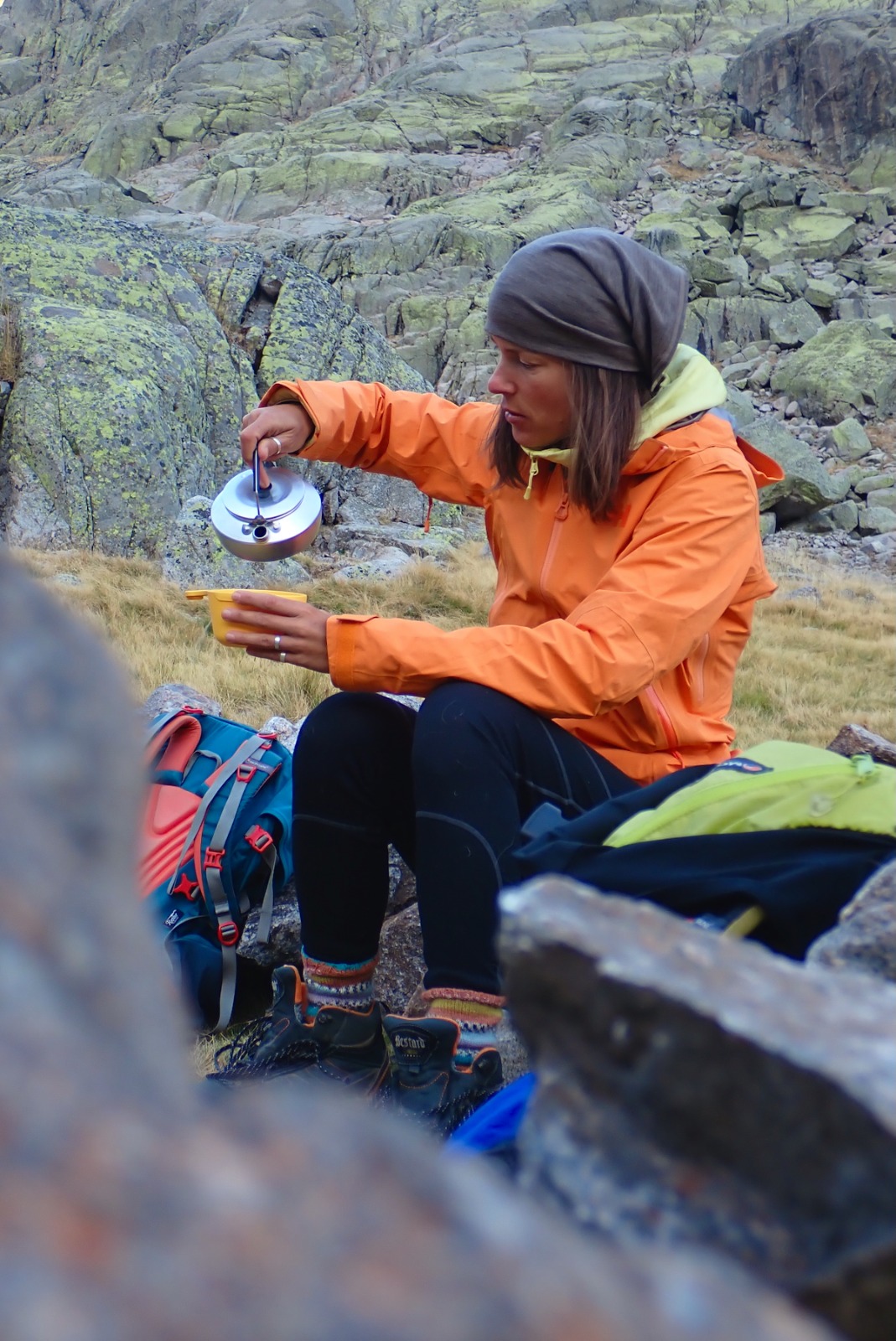
When it comes to sleeping bags, it is wise to be conservative and not rely on the minimum or “extreme” temperature ratings provided by manufacturers. A camping stove, although it may seem like an unnecessary luxury, greatly expands meal options, making dehydrated foods practical and helping save weight. It is also useful for heating water for tea, instant soups, and other comforts.
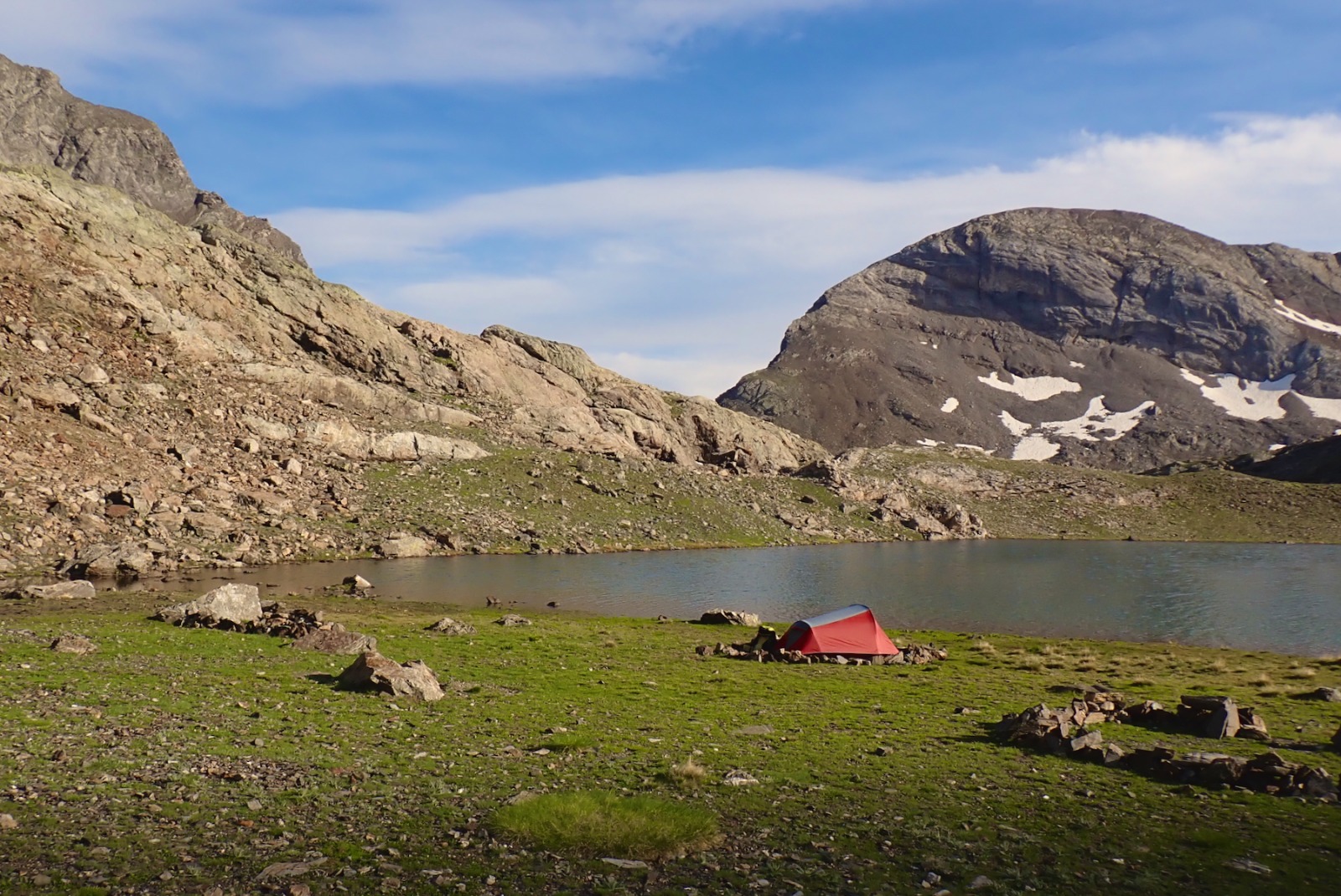
As for sleeping pads, we find folding foam pads more functional and lighter than inflatable ones because they can be used on virtually any terrain. Regarding shelters, even a very small tent provides extra protection and comfort in windy or rainy conditions.
9º DISCONNECT TO CONNECT
Whenever we head into the mountains, the first thing we do is inform our family of our plans and then switch our phones to airplane mode. We prefer to save battery power for emergencies or for sending brief “everything is fine” messages whenever we find signal.
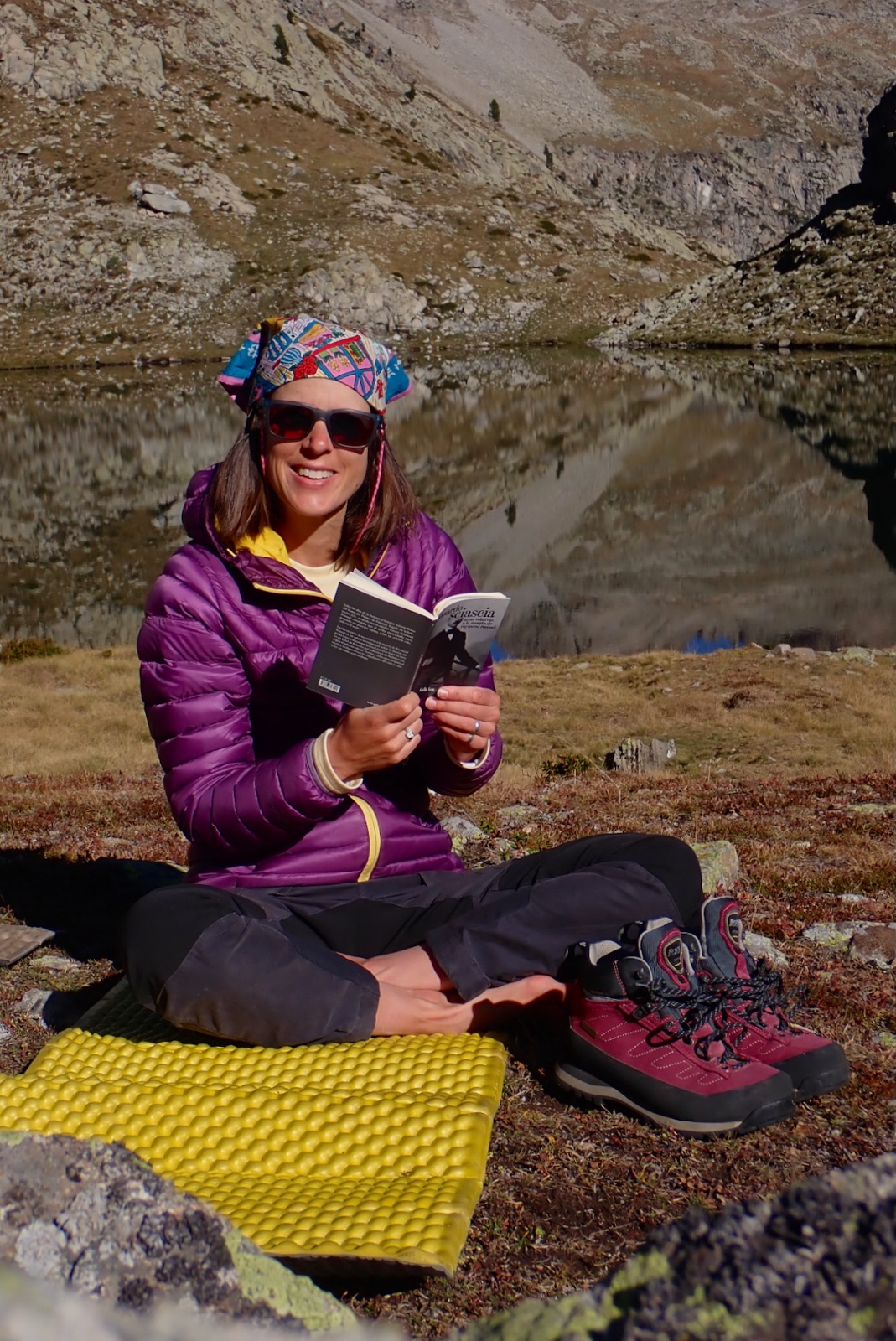
Slow mountain travel pairs perfectly with the healthy ritual of disconnection. Putting social media and WhatsApp aside and embracing a simpler way of life allows us to connect with a different reality. For moments of leisure, we might pack a wildflower guide, a book such as The Art of Patience by Sylvain Tesson, a notebook and pencil for sketching, or a journal for writing.
10º LEAVE THE SMALLEST POSSIBLE FOOTPRINT
Although we already mentioned it at the beginning, waste management deserves special emphasis. We must learn to enjoy nature while caring for what belongs to everyone, respecting unattended shelters and their surroundings, remaining discreet and quiet, and interfering as little as possible with the ecosystem.
To put it plainly: all trash must be carried home, including mandarin peels, eggshells, and pistachio shells.
Solid human waste should be buried in a small hole dug with a lightweight trowel that weighs about the same as one of those GPS watches used to record tracks. Toilet paper should never be left under a rock, decorating a shrub, or burned. Instead, it should be packed out in a small waste bag, the kind used for dog waste, and carried home along with the rest of the trash.